Sauces & Condiments
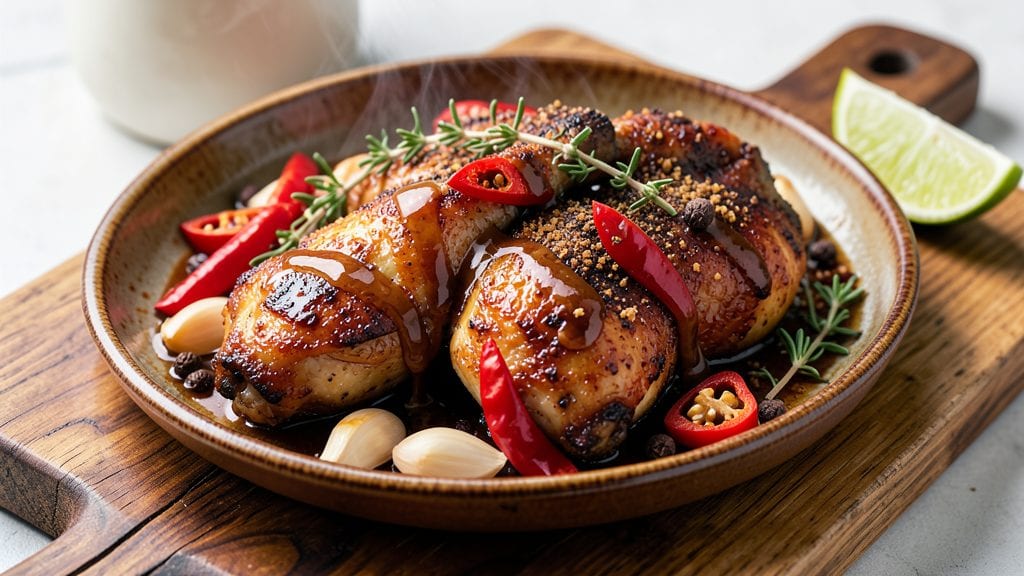
This traditional jerk chicken marinade transforms simple chicken into a symphony of smoky, sweet, and fiery Jamaican flavors that will transport you to the island with every bite. The secret lies in balancing allspice, Scotch bonnet peppers, and citrus—each ingredient playing its part in creating that signature depth.
I’ve perfected this marinade over years of testing, ensuring the spices meld without overpowering the natural taste of the meat.
The marinade’s magic comes from its liquid base: a tangy blend of lime juice, soy sauce, and brown sugar that tenderizes while building flavor. Allspice berries and thyme create that unmistakable jerk aroma, while Scotch bonnet peppers deliver heat that lingers just enough to satisfy.
Let the chicken soak for at least 4 hours (overnight is ideal) to let the spices penetrate deeply, resulting in meat that’s not just seasoned but infused with character.
What you’ll end up with is chicken that’s boldly aromatic, with a crust that crackles when grilled or roasted and flesh that’s juicy yet packed with smoky-sweet heat. The marinade doubles as a sauce—simply reduce it on the stovetop for a glossy glaze that ties everything together.
This isn’t just a marinade; it’s the soul of Jamaican cooking in a bowl.
Store any leftover marinade in an airtight container in the fridge for up to 5 days, or freeze for longer shelf life. Whether you’re grilling, baking, or air-frying, this marinade turns ordinary chicken into a showstopper. Let’s get started on the flavors that define jerk cuisine.
Ingredients for traditional jerk chicken marinade
Nine ingredients. One bowl. The heart of Jamaican flavor in your kitchen.
| Ingredient | Amount | Notes |
|---|---|---|
| Allspice Berries 🌶️ | 1 tbsp | Ground or whole, toasted for depth |
| Scotch Bonnet Peppers 🌶️ | 2 whole | Seeds removed for moderate heat |
| Fresh Thyme Leaves 🌿 | ¼ cup | Stems removed, loosely packed |
| Garlic Cloves 🧄 | 6 cloves | Peeled, roughly chopped |
| Brown Sugar 🍯 | ½ cup | Light or dark, packed |
| Fresh Lime Juice 🍋 | ½ cup | From 2-3 limes, freshly squeezed |
| Soy Sauce 🥢 | ¼ cup | Light or dark, not low-sodium |
| Olive Oil 🫒 | ½ cup | Extra-virgin for richness |
| Ground Ginger 🌿 | 1 tsp | Freshly grated better |
| Sea Salt 🧂 | 1 ½ tsp | Kosher or fine grain |
Allspice berries are the soul of jerk—Penzeys or bulk bins have the best quality. If you can't find whole berries, ground allspice works, but toast them first in a dry pan for 30 seconds to wake up the flavor. Scotch bonnet peppers are non-negotiable for that signature heat (use gloves!), but Habanero or Thai chili in a pinch—just halve the amount. Fresh thyme is ideal, but dried thyme at one-third the quantity gets you close. For the brown sugar, muscovado or demerara adds caramel notes if you're feeling fancy.
No Scotch bonnet? Fresh jalapeño or serrano peppers work, but you'll lose that fruity, smoky depth. The lime juice needs to be fresh—bottled won't cut it here. Soy sauce can be swapped for coconut aminos or tamari if you're avoiding gluten. For the ginger, freshly grated (about 1 tbsp) is worth the extra minute—it brightens everything. The olive oil should be fruity, not bitter. California or Italian varieties from Trader Joe's or Whole Foods are my go-tos. If you're making this ahead, keep the lime juice separate until ready to use.
This marinade keeps for 5 days in the fridge, sealed tight. For longer storage, freeze in ice cube trays—thaw overnight in the fridge before using. The leftover marinade reduces beautifully into a sauce, so always make extra. If you're not using it all at once, portion it into small containers. The spices mellow slightly after marinating overnight, so taste and adjust heat before cooking. Trust me, you'll want seconds.
Why You'll Love This Recipe
- No-Fuss Blend: I swear by this marinade because it’s just a pulse-and-pour situation. Toss everything—whole allspice berries, garlic cloves, even the Scotch bonnet—into the food processor, add a splash of oil, and bam. No peeling, no mincing, no mess. The heat from the peppers and the depth of the allspice do all the work while I’m still debating what to watch on TV.
- Smoky-Sweet Magic: That brown sugar isn’t just for sweetness—it caramelizes into a sticky, smoky crust when you grill or bake it. Pair that with the bright punch of Scotch bonnet and the earthy warmth of thyme, and you’ve got a flavor that’s ridiculously hard to resist. Honestly, I’ve caught myself licking the bowl after making it.
- Weeknight to BBQ Star: This marinade works just as well for a quick weeknight dinner as it does for a backyard cookout. Slather it on chicken thighs for sheet-pan ease, or let it sit overnight for deeper flavor. I’ve even used the extra to glaze pineapple or toss with tofu—because why should chicken have all the fun?
- Budget-Friendly Powerhouse: Allspice berries and Scotch bonnet peppers might sound fancy, but they’re cheap staples at most grocery stores. A little goes a long way, and the marinade keeps well in the fridge for up to a week. Between us, I’ve turned a $5 bag of chicken thighs into a meal that feels like a celebration—without breaking the bank.
Step-by-step instructions for traditional jerk chicken marinade
Here's how to blend authentic Jamaican flavors into a marinade that transforms simple chicken into fiery, aromatic perfection.
Toast the Allspice Berries for Depth
Heat a dry skillet over medium heat and add the 1 tablespoon allspice berries. Toast them for 1-2 minutes until fragrant and slightly darkened—you'll smell that warm, piney aroma that's the heart of jerk seasoning. Let them cool completely before grinding, as this prevents burning when added to the marinade.
I like to use a mortar and pestle for grinding, but a clean spice grinder works too. Crush the toasted berries into a fine powder—this releases their essential oils and creates that signature "jerk" complexity. The toasted flavor will carry through the entire marinade, giving it a smoky-sweet backbone that balances the heat.
Blend the Base Ingredients
In a food processor or blender, combine the 2 whole Scotch bonnet peppers (seeds removed), 0.25 cup fresh thyme leaves, 6 cloves garlic, 0.5 cup brown sugar, 1 teaspoon ground ginger, and 1.5 teaspoons sea salt. Pulse until the mixture forms a coarse paste—you want some texture to cling to the chicken, not a completely smooth liquid.
This combination creates the perfect balance: the Scotch bonnet provides heat without overwhelming, while the thyme and ginger add earthy warmth. The brown sugar caramelizes slightly during marinating, creating a sticky glaze that locks in moisture. Pulse just until combined—over-blending turns it into a sauce instead of a marinade.
Incorporate the Wet Components
With the food processor running, slowly drizzle in the 0.5 cup olive oil and 0.5 cup fresh lime juice. Then add the 0.25 cup soy sauce and pulse until everything is fully emulsified. The mixture should be thick but pourable—like a loose, vibrant paste that coats the back of a spoon.
The lime juice brightens the flavors while preventing bacterial growth, and the soy sauce adds umami depth that ties everything together. Taste as you go—this is where you can adjust the balance. Need more heat? Add a pinch of the reserved Scotch bonnet seeds. Too sharp? A touch more brown sugar smooths it out.
Marinate the Chicken Properly
Place the chicken pieces in a resealable plastic bag or shallow dish and pour the marinade over them. Massage it into every crevice—this ensures even flavor distribution. Seal the bag and refrigerate for at least 4 hours, but I recommend overnight for maximum penetration and tenderness.
Turn the chicken occasionally during marinating to prevent it from sitting in the acidic lime juice too long, which can start to "cook" the surface. The marinade should absorb completely, leaving the chicken glistening with a deep amber hue. This is your signal that the flavors have melded perfectly—ready to be grilled or roasted to smoky perfection.
Prepare for Cooking (Don't Skip This!)
Before cooking, let the marinated chicken sit at room temperature for 20-30 minutes. This equalizes the internal temperature, ensuring even cooking. Pat the chicken dry just before applying heat—this creates a better sear and prevents the marinade from steaming off instead of caramelizing.
The marinade should leave a sticky, aromatic residue on your hands when you handle the chicken. This residue is your guarantee of flavor—it means every bite will deliver that perfect balance of sweet, spicy, smoky, and tangy notes that define authentic jerk chicken. Now you're ready to grill, roast, or smoke your way to restaurant-quality results.
Pro Tips For Making Traditional Jerk Chicken Marinade
- CRUSH ALLSPICE WHOLE: I learned this the hard way—grinding allspice berries beforehand dulls their flavor fast. Keep them whole until the last 30 minutes of marinating, then crush them with the flat side of a knife or pestle. This releases the oils just in time to punch up the flavor without turning bitter.
- PEEL SCOTCH BONNET CAREFULLY: That pepper’s heat lives in its membrane, not just the flesh. After seeding, give it a quick soak in warm water for 10 seconds—peels right off. Skip this, and you’ll end up with a marinade that’s more watery than fiery.
- MARINATE COLD, NOT ROOM TEMP: Jerk marinade works best when the chicken stays cold—prevents it from cooking prematurely in the acid. Toss the pieces in a sealed bag or container, then stash it in the fridge for at least 4 hours (overnight is ideal). Warm marinade = sad, rubbery chicken.
- BALANCE SWEET WITH SALT: Brown sugar caramelizes fast, but if your marinade tastes one-note, you’re missing salt. For every 2 tablespoons of sugar, add 1 teaspoon of kosher salt—trust me, the jerk flavor needs that contrast to pop. (Yes, even if the recipe doesn’t say so.)
Make-ahead tips for leftovers
Marinade Prep Ahead
Make this marinade 24 hours ahead for the most flavorful results. The spices and citrus need time to meld, and the acidity tenderizes the chicken gradually. Store it in an airtight container in the fridge—this keeps it fresh for up to 5 days.
I like to portion it into small glass jars so I can grab exactly what I need without cross-contamination. 🌶️
Chicken Prep Timeline
Marinate the chicken for at least 4 hours, but overnight is ideal. If you’re short on time, aim for 6-8 hours—this still gives great results. I’ve found that bone-in, skin-on pieces (like thighs or drumsticks) absorb flavor better than breasts.
For best texture, don’t exceed 24 hours in the marinade, as the acid can start to break down the meat too much. 💡
Freezing for Later Use
Freeze unused marinade in ice cube trays for easy portioning. Once frozen, transfer cubes to a ziplock bag and store for up to 3 months. Thaw overnight in the fridge before using.
For chicken, freeze the marinated pieces in a single layer on a tray first (to prevent clumping), then transfer to a bag. Cook from frozen—just add 10-15 extra minutes to the grilling or baking time. ❄️
Reviving Leftover Marinade
If your marinade looks dull after sitting in the fridge, revive it by heating it gently in a saucepan over low heat for 3-5 minutes. Stir in 1 tbsp brown sugar and 1 tsp lime juice to restore brightness.
This reduced marinade makes an amazing glaze—simply brush it on chicken during the last 5 minutes of grilling for a caramelized finish. 🔥
Double-Duty Marinade
Use the same marinade to baste the chicken while cooking. Keep it in a small bowl on the grill or oven rack, brushing it on every 10-15 minutes.
The residual marinade creates a sticky, flavorful crust that locks in juices. For extra richness, mix 1 tbsp melted butter into the leftover marinade before basting. 💛
Safety First
Never reuse marinade that’s touched raw chicken unless you boil it for 5 minutes first to kill bacteria. If you’re grilling, save some marinade to reduce into a sauce—just reserve ¼ cup before adding chicken to the bag.
Label your containers clearly with the date to track freshness. Always err on the side of caution with raw meat marinades. ✨
Nutrition facts
Frequently asked questions
Can I use dried thyme instead of fresh?
Yes, but reduce the amount by one-third—so 1 teaspoon dried thyme replaces 0.25 cup fresh. Fresh thyme has a brighter, more complex flavor, but dried works in a pinch. Toast the dried thyme lightly in a dry pan for 30 seconds to enhance its aroma before blending.
What if I can't find Scotch bonnet peppers?
Use Habanero or Thai chili peppers instead, but halve the quantity (1 pepper instead of 2). For milder heat, try jalapeño or serrano, but you’ll lose the fruity depth. Remove seeds and membranes first to control spice levels.
How do I adjust the heat level?
For milder heat, remove Scotch bonnet seeds and membranes before blending. For extra kick, add 1-2 extra pepper seeds or a pinch of cayenne. Always taste the marinade before applying—adjust while it’s still in the blender for best results.
Can I use this marinade on other meats?
It works beautifully on pork, shrimp, or tofu. For fish, reduce marinating time to 30-60 minutes to prevent over-acidification. The bold flavors complement hearty cuts like ribs or sausages, but avoid delicate meats like chicken breasts (they can dry out).
Why does my marinade look watery?
Watery marinade happens when too much liquid is added (like extra lime juice) or when ingredients aren’t pulsed enough. For a thicker consistency, blend until it forms a paste-like texture—this clings better to meat. If it’s already too thin, simmer it uncovered for 5 minutes to reduce.