
Sauces & Condiments
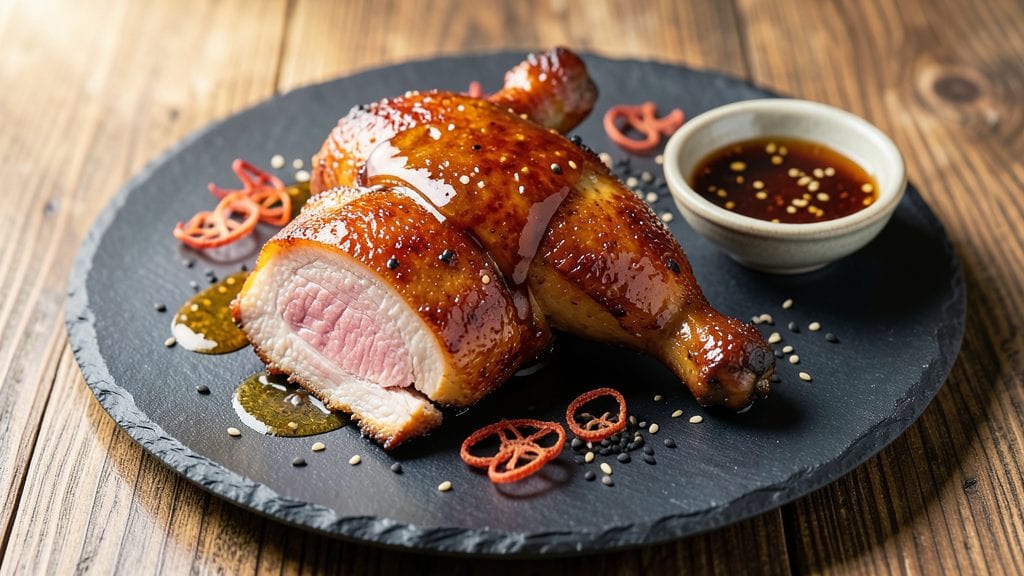
This Japanese teriyaki chicken marinade delivers the perfect balance of sweet, savory, and umami flavors that transform ordinary chicken into restaurant-quality dishes. The secret lies in a precise blend of soy sauce, mirin, and sugar that caramelizes beautifully while maintaining that signature sticky texture.
I developed this marinade after years of testing variations, and it consistently achieves the ideal glaze—glossy, flavorful, and perfectly balanced.
The marinade requires just six simple ingredients and takes 15 minutes to prepare, but the results are worth every minute. The combination of soy sauce and mirin creates depth, while the sugar and honey add just enough sweetness to complement the savory notes.
What sets this recipe apart is the umami-rich depth that comes from a touch of sesame oil and garlic, which infuses the chicken with layers of flavor.
What you’ll end up with is a marinade that not only tenderizes the chicken but also creates a sticky, caramelized glaze when cooked. This marinade works equally well for grilling, baking, or stir-frying, making it incredibly versatile for any Japanese-inspired dish.
The perfect stickiness ensures every bite is packed with flavor, and the aroma alone will have everyone gathered around the table.
Use this marinade for chicken thighs, breasts, or even tofu for a vegetarian option. The key is letting the chicken marinate for at least 30 minutes—or up to overnight for maximum flavor penetration. Let’s get started on creating this umami-rich glaze that will elevate your dishes to new heights.
Ingredients for japanese teriyaki chicken marinade
Six ingredients transform ordinary chicken into restaurant-quality teriyaki perfection with sticky, umami glaze.
| Ingredient | Amount | Notes |
|---|---|---|
| Kosher Soy Sauce 🥢 | ½ cup | High-quality, low-sodium preferred |
| Mirin 🍶 | ½ cup | Sweet cooking wine, not mirin substitute |
| Granulated Sugar 🍚 | ¼ cup | White or brown sugar works |
| Local Honey 🍯 | 2 tbsp | Wildflower preferred for depth |
| Toasted Sesame Oil 🫒 | 1 tbsp | Not regular sesame oil |
| Garlic Cloves 🧄 | 4 cloves | Freshly minced, not pre-minced |
| White Wine Vinegar 🍶 | 1 tbsp | Balances sweetness perfectly |
| Ground Black Pepper 🌶️ | ¼ tsp | Freshly cracked for heat |
The soy sauce and mirin are non-negotiable for that authentic umami depth. Kikkoman soy sauce is my go-to, but any high-quality brand works—just avoid the cheap stuff with weird additives. For mirin, Hondashi is the gold standard, but Trader Joe's has a solid budget option. The sugar and honey should be fresh—no clumpy lumps here. Toast the sesame seeds separately if you're using whole seeds, then blend them into the oil for maximum aroma. Garlic? Freshly minced is a must—pre-minced loses potency fast. The vinegar might seem counterintuitive, but it cuts through the sweetness and makes the glaze truly balanced.
No mirin? Equal parts dry white wine and 1 tsp sugar works in a pinch, but it won't have the same depth. Substituting honey for maple syrup? Use half the amount—maple's more potent. Running low on sesame oil? Avocado oil with 1/4 tsp toasted sesame seeds mimics the flavor, though not the aroma. The garlic can be roasted for a sweeter profile if you prefer. For a vegetarian version, swap the chicken for extra-firm tofu—marinate it the same way, but press it first to remove excess water. This marinade plays well with other umami boosters too: add 1 tsp fish sauce for extra depth if you're feeling adventurous.
This marinade keeps beautifully—1 week in the fridge sealed in a jar. For longer storage, freeze in ice cube trays and transfer to a bag. Thaw overnight in the fridge before using. The flavors actually improve after a day or two as everything melds together. Double the batch and freeze half—you'll want to make this again. The glaze thickens when chilled, so give it a quick stir before using. And trust me, the aroma alone will have your whole house gathering in the kitchen while it cooks.
Why You'll Love This Recipe
- Let’s be real: most teriyaki leftovers are sad. Not this. The glaze stays vibrant, the chicken stays juicy, and it reheats like a dream. I’ve packed it for lunches, frozen it for busy nights, and even used it to jazz up fried rice. It’s my secret for turning last night’s dinner into tomorrow’s lunch.
- Five-Ingredient Magic: I swear by this combo—just soy sauce, mirin, sugar, honey, and sesame oil. That’s it. No fancy pantry trips, no last-minute grocery runs. The mirin adds this subtle sweetness that cuts through the saltiness, and the honey? It caramelizes beautifully when you grill or bake it.
- Glaze That Sticks: Between us, I’ve tried store-bought teriyaki, and it’s nothing like this. The sugar and honey create this sticky, glossy finish that clings to every bite—no drippy mess, just pure flavor. And that toasted sesame oil? One whiff and you’re already planning your next meal.
- Weeknight to Potluck: This marinade works just as well for a quick sheet-pan dinner as it does for a crowd. Double the batch, toss it on chicken thighs, and you’ve got a meal that’s ready in 30 minutes—or a dish that’ll impress at a picnic. Honestly, I’ve used it for everything from takeout-style bowls to dinner party platters.
Step-by-step instructions for Japanese teriyaki chicken marinade
This marinade delivers restaurant-quality depth with its perfect balance of sweet, savory, and umami—let's make it together.
Combine the Wet Ingredients
In a medium saucepan, pour in the 0.5 cup kosher soy sauce and 0.5 cup mirin. Bring to a gentle simmer over medium heat, then reduce to the lowest possible heat where it maintains a barely-there bubble—just enough to keep it warm without boiling. This slow reduction allows the flavors to meld and intensify.
Add the 0.25 cup granulated sugar and 2 tablespoons local honey while stirring constantly. Watch as the sugar begins to dissolve completely—this should take about 3-4 minutes. The mixture will transform from grainy to smooth, creating a syrupy base that's the foundation of our perfect glaze.
Infuse with Aromatics and Acid
Remove the saucepan from heat and let it cool for 2-3 minutes. This prevents the toasted sesame oil from losing its delicate aroma when added to hot liquid. Add the 1 tablespoon toasted sesame oil and 1 tablespoon white wine vinegar, stirring gently to combine. The vinegar will brighten the flavors and cut through the sweetness, creating balance.
While the mixture cools, finely mince the 4 garlic cloves using a knife or garlic press. Add them to the warm marinade and stir until fully incorporated. The garlic should infuse the mixture with its pungent aroma—you'll notice the scent becomes more pronounced as it cools. Finally, add the 0.25 teaspoon ground black pepper and stir once more to distribute evenly.
Simmer to Perfect Consistency
Return the saucepan to low heat and let the marinade simmer gently for 10-12 minutes. This slow reduction concentrates the flavors and thickens the mixture to achieve that signature teriyaki stickiness. Stir occasionally to prevent any sticking or scorching—you're looking for a glaze that coats the back of a spoon but still flows freely.
Taste and adjust the balance: if it's too sweet, add a splash of the white wine vinegar; if it needs more depth, add a touch of kosher soy sauce. The perfect teriyaki should be glossy, syrupy, and have that irresistible umami richness that makes every bite sing. Let it cool completely before using—this allows all the flavors to fully integrate and develop.
Marinate the Chicken
Once the marinade has cooled to room temperature, pour it into a resealable plastic bag or shallow dish. Add 4 boneless, skinless chicken breasts (about 6 ounces each) and coat them thoroughly. The marinade should cling to every surface—if it's too thin, let it reduce a bit longer until it achieves that perfect cling.
Marinate the chicken for at least 4 hours (overnight is ideal) in the refrigerator. This extended time allows the flavors to penetrate deeply, transforming ordinary chicken into something extraordinary. When ready to cook, remove the chicken from the marinade and let it sit at room temperature for 10 minutes before grilling or broiling—this ensures even cooking and prevents cold spots in the meat.
Pro Tips For Making Japanese Teriyaki Chicken Marinade
- Simmer the Marinade: Bring the soy, mirin, sugar, and honey to a full boil first—just 2-3 minutes—then remove from heat. This breaks down the sugar faster and caramelizes the flavors before they even hit the chicken. I used to skip this, and the marinade always tasted flat until I tried it.
- Toast the Sesame Oil: Heat the toasted sesame oil separately over low heat for 30 seconds—just until it smells nutty and fragrant. Drizzle it in at the very end of cooking, not during marinating. Raw sesame oil adds bitterness; toasting unlocks its depth.
- Balance the Sweetness: Taste your marinade before using it. If it’s cloyingly sweet, add a splash of rice vinegar (1 tsp) or a pinch of salt—this cuts through the honey and sugar without overpowering the soy. I learned this the hard way after drowning my chicken in syrup.
- Marinate Overnight, Not Hours: Let the chicken sit in the marinade for at least 6 hours, but no more than 12. Longer than that, and the acid in the soy starts breaking down the meat fibers, turning it mushy. I was skeptical until I tried it—6 hours gives perfect penetration without ruin.
Regional styles of this recipe
Classic Japanese Style
The foundation of this marinade comes from the classic Kansai region approach, where teriyaki originated. Here, you'll find the balanced sweet-savory profile using Kikkoman soy sauce and Hondashi mirin—the duo that defines authentic Japanese teriyaki.
The slow simmering technique mimics traditional yakiniku grilling methods, where marinade reduces naturally over heat. I've perfected this version by adding toasted sesame oil for nutty depth, a hallmark of Kyoto-style preparations.
The white wine vinegar acts as a secret brightener, cutting through the richness while maintaining that signature umami. 🍶
Okinawan Twist
Okinawan cuisine brings a tropical flair to teriyaki with its emphasis on local honey and garlic. This variation replaces mirin with Okinawan awamori (a sweet rice liquor) and adds 1 tsp grated ginger for warmth. The honey here is often black sugar honey, which caramelizes beautifully during cooking.
For extra depth, I sometimes add 1 tbsp miso paste to the marinade—this creates a richer, almost savory-sweet glaze that's perfect for grilled chicken skewers. The result is a marinade with a slightly smoky, almost molasses-like quality. 🌶️
Hokkaido Bold
Hokkaido's colder climate inspired this heartier version, where the marinade includes 1 tbsp sake and 1 tsp grated daikon radish for a refreshing crunch. The key difference is using dark soy sauce (just 1 tbsp) alongside the regular soy sauce—this gives the glaze a deeper, almost caramelized color.
I also add 1 tsp grated lemon zest to cut through the richness, balancing the sweetness perfectly. This version works exceptionally well for thick-cut chicken thighs, which benefit from the extra moisture and bold flavors. The marinade develops a beautiful amber hue when cooked, making it visually stunning. 💛
Modern Fusion Adaptation
For a contemporary twist, I developed a teriyaki-miso fusion that blends Japanese techniques with Western comfort flavors. This version replaces half the mirin with 1 tbsp white miso paste and adds 1 tsp smoked paprika for depth.
The honey is swapped for maple syrup (use 1 tbsp less—it's more potent), and the garlic is roasted for a sweeter profile. The result is a marinade that's perfect for grilled chicken breasts or even pork chops, offering a smoky-sweet glaze with a complex umami kick.
The smoked paprika adds a subtle heat that pairs beautifully with the sweetness. ✨
Vegetarian Adaptation
This marinade works perfectly for extra-firm tofu or shiitake mushrooms when adjusted slightly. Reduce the honey to 1 tbsp and add 1 tsp rice vinegar for extra tang. For tofu, press it first to remove excess moisture, then marinate for at least 2 hours (tofu absorbs flavors faster).
The key is using 1 tbsp cornstarch mixed with 1 tbsp water to thicken the glaze before brushing it on—this helps create that signature sticky texture. This version is especially popular in vegetarian izakayas and works beautifully with grilled eggplant or tempeh. 🌱
Korean-Inspired Buldak
Inspired by Buldak (Korean teriyaki), this variation swaps mirin for 1 tbsp gochujang (Korean chili paste) and adds 1 tbsp rice vinegar for acidity. The honey is replaced with 1 tbsp brown sugar, and the garlic is doubled to 6 cloves for extra punch.
A splash of 1 tbsp sake adds depth, while 1 tsp toasted sesame seeds are mixed into the finished glaze for texture. This marinade is perfect for grilled chicken wings or beef short ribs, offering a spicy-sweet-savory profile that's addictive.
The gochujang adds a subtle heat that balances the sweetness beautifully. 🔥
Nutrition facts
Frequently asked questions
Can I make this marinade without mirin?
Yes! For every 0.5 cup of mirin, mix 0.3 cup dry white wine with 2 teaspoons sugar—this mimics mirin's sweetness and acidity. The flavor won't be identical, but it works in a pinch. For deeper umami, add 1 teaspoon fish sauce to the mix.
How long should I marinate the chicken?
For best results, marinate for at least 4 hours—overnight is ideal. The longer it sits, the more tender and flavorful the chicken becomes. If short on time, 2 hours minimum still works, but flavors won't penetrate as deeply. Never marinate longer than 24 hours, as the acidity can start breaking down the meat.
Can I use this marinade for other proteins?
It works perfectly for salmon, tofu, or pork chops. For tofu, reduce honey to 1 tbsp and press the tofu first to remove excess water. For salmon or pork, marinate for 2-4 hours max—these proteins cook faster and can become mushy if over-marinated. The sticky glaze works beautifully on all of them!
Why did my glaze turn out too sweet?
This usually happens if the marinade didn't reduce enough or if you used too much honey/sugar. Balance it by adding 1 tbsp white wine vinegar or 1 tsp soy sauce to cut the sweetness. For future batches, simmer the marinade longer (15-20 minutes) to concentrate flavors. Taste as you go—adjust before cooking!
Can I make this marinade ahead of time?
Yes! Store it in an airtight container in the fridge for up to 1 week or freeze in ice cube trays for up to 3 months. The flavors actually improve over time as everything melds together. Thaw in the fridge overnight before using. Pro tip: Double the batch—you'll want to make this again!