
Side Dishes
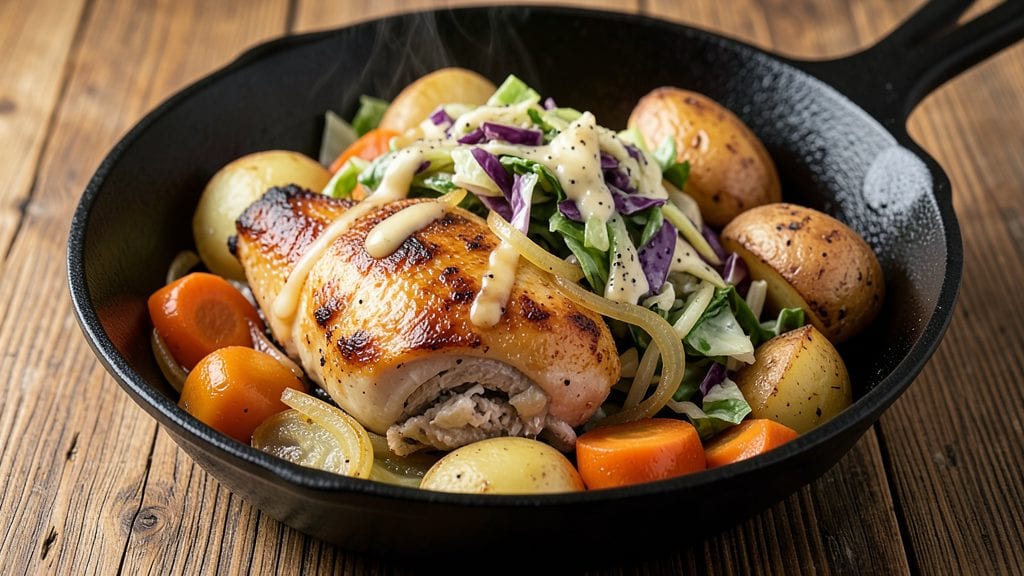
This chicken sauerkraut potato recipe delivers the kind of hearty, one-pan comfort that reminds me of my grandmother's kitchen in rural Georgia. The tangy bite of sauerkraut cuts through the richness of the chicken and potatoes, creating a balance that's both satisfying and balanced.
I've perfected this dish over years of testing, ensuring every bite delivers that perfect harmony of textures and flavors.
The beauty of this recipe lies in its simplicity and efficiency—just one pan, minimal prep, and about 45 minutes of hands-on time. You'll start with tender chicken thighs, which develop a golden crust while braising in the pot, then add potatoes that crisp at the edges while staying tender inside.
The sauerkraut, lightly simmered to soften without losing its signature tang, ties everything together into a cohesive, comforting meal.
What you'll end up with is a dish that's rich in flavor yet light enough to feel balanced—a perfect combination of savory chicken, crisp-tender potatoes, and that bright, tangy sauerkraut.
The aroma alone will have everyone gathered around the table, and the first bite delivers that unmistakable taste of home-cooked comfort. This is the kind of meal that feels like a hug on a plate.
Perfect for family dinners, weekend gatherings, or when you simply crave something hearty and comforting. The leftovers reheat beautifully, making it an ideal make-ahead option for busy weeks. Let's get started on this one-pan masterpiece that brings German-style comfort to your table.
Ingredients for chicken sauerkraut potato
One-pan magic with chicken thighs, sauerkraut's tangy bite, and crisp-tender potatoes—your new comfort food staple.
| Ingredient | Amount | Notes |
|---|---|---|
| Chicken Thighs, Bone-In 🍗 | 1 ½ lb | Skin-on for crispy texture |
| Russet Potatoes 🥔 | 2 lb | Cut into 1.5-inch chunks |
| Sauerkraut, Fresh 🥬 | 2 cups | Drained, rinsed lightly |
| Carrots | 3 medium | Cut into 1-inch pieces |
| Yellow Onion 🧅 | 1 whole | Thinly sliced |
| Applesauce, Unsweetened 🍎 | ½ cup | For natural sweetness |
| Dijon Mustard 🍯 | 1 tbsp | For depth of flavor |
| Beef Broth 💧 | 1 cup | Low-sodium preferred |
| Dried Thyme 🌿 | 1 tsp | Or 1 tbsp fresh |
| Bay Leaves 🍃 | 2 whole | Removed before serving |
| Salt 🧂 | 1 ½ tsp | Diamond Crystal preferred |
| Black Peppercorns 🌶️ | ½ tsp | Freshly cracked |
| Extra-Virgin Olive Oil 🫒 | 2 tbsp | For crisping chicken |
The chicken thighs are the star here—bone-in, skin-on for that crispy, golden crust you can't get with boneless. Look for thighs with good marbling at Whole Foods or your local butcher shop, or grab a family pack at Costco if you're feeding a crowd. The sauerkraut should be fresh, not vinegary—check the date on the jar, and if it's been open for more than a week, give it a quick rinse to mellow out the tang. For the potatoes, Russets are your best bet—they hold their shape and crisp beautifully. If you can't find them, Yukon Golds work in a pinch, but they'll be a touch creamier. The carrots? Baby carrots are a time-saver, but regular ones work just as well if you're chopping them yourself.
No unsweetened applesauce? Purée a peeled apple with a splash of lemon juice—it's a perfect stand-in. Short on beef broth? Chicken broth works too, just add a pinch of Worcestershire sauce for depth. The mustard is key—Dijon gives you that subtle tang, but whole-grain mustard adds texture if you're feeling fancy. Swapping in smoked paprika for half the thyme gives this dish a German-inspired smokiness. And if you're out of bay leaves, a pinch of allspice adds warmth without overpowering. The olive oil? Use a high-quality extra-virgin—it's what helps crisp the chicken skin to perfection.
This dish tastes even better the next day—make extra and portion it out for easy lunches. The leftovers keep for 4-5 days in the fridge, covered tightly to trap in those amazing aromas. For longer storage, freeze portions for up to 3 months, though I find myself eating it all within a week. The best part? One pan, no stress—just toss everything in, let it simmer, and enjoy the process. The aroma alone will have your whole house smelling like a German countryside kitchen.
Why You'll Love This Recipe
- One-Pan Magic: I swear by this recipe—just toss everything on a sheet pan, roast, and walk away. No pots, no pans, no stress. The potatoes crisp up while the chicken gets juicy, all thanks to that tangy sauerkraut doing its thing.
- Tangy Crunch Combo: That sauerkraut isn’t just a side—it’s the star. The sharpness cuts through the richness of the chicken thighs, and when the carrots caramelize, it’s like a little flavor explosion in every bite. Honestly, I’ll take this over plain roasted chicken any day.
- Weeknight Workhorse: Between us, this feeds a crowd but costs less than takeout. Double the recipe, and you’ve got leftovers for lunch—just reheat and serve. My college-aged kids actually eat it, and that’s saying something.
- Budget-Friendly Feast: Bone-in chicken thighs stretch further than breasts, and potatoes? Cheap and filling. Sauerkraut adds depth without breaking the bank, and onions/carrots round it out. It’s the kind of meal that makes grocery day feel like a win.
Step-by-step instructions for chicken, sauerkraut, and potatoes recipe
This one-pan German masterpiece delivers hearty, comforting flavors with minimal effort—perfect for cozy evenings.
Prep and Sear the Chicken for Maximum Flavor
Pat the 1.5 lb chicken thighs, bone-in completely dry with paper towels—this ensures crispy skin. Season generously with 1.5 tsp salt and 0.5 tsp black peppercorns, pressing the spices into the meat so they stick. Heat 2 tbsp extra-virgin olive oil in a large Dutch oven over medium-high heat until shimmering.
Add the chicken skin-side down and let it sear undisturbed for 5-6 minutes until golden brown and crispy. Flip once and cook another 4-5 minutes until the internal temperature reaches 160°F. Remove and set aside—this jumpstart gives the dish its signature rich, savory foundation.
Build the Potato and Vegetable Base
In the same Dutch oven, add 2 tbsp extra-virgin olive oil (yes, we reuse it—this is where flavor builds). Toss in the 2 lb russet potatoes cut into 1.5-inch chunks, 3 medium carrots cut into 1-inch pieces, and 1 whole yellow onion sliced thinly. Cook for 5 minutes until the potatoes begin to soften slightly and the onions turn translucent.
Stir in 2 cups sauerkraut, fresh (drained and rinsed lightly) and 1 tsp dried thyme. Cook for another 3 minutes, letting the sauerkraut release its tangy aroma. This step develops the base flavors while keeping everything in one pan—no chopping boards to clean later.
Deglaze and Simmer the Sauce
Pour in 1 cup beef broth and scrape up all the browned bits from the bottom of the pan—this is where the magic happens. Add 0.5 cup unsweetened applesauce and 1 tbsp Dijon mustard, stirring to combine. The applesauce adds natural sweetness that balances the sauerkraut's acidity, while the mustard deepens the flavor profile.
Bring the mixture to a gentle simmer, then add the seared chicken back to the pot. Nestle the 2 whole bay leaves into the vegetables and cover with a tight-fitting lid. Reduce heat to low and let it cook for 45-50 minutes, stirring occasionally, until the potatoes are fork-tender and the chicken reaches 175°F internally.
Finish with Crispy Top and Resting Time
Remove the lid and increase heat to medium-high. Let the mixture cook uncovered for 5-7 minutes until the top develops a golden crust and the liquid reduces slightly. This final step intensifies the flavors and gives the dish that restaurant-quality finish.
Let the entire dish rest for 10 minutes before serving. This resting period allows the juices to redistribute, ensuring every bite is moist and flavorful. Serve directly from the Dutch oven for that comforting, family-style presentation.
Pro Tips For Making Chicken Sauerkraut Potato
- Par-Cook Potatoes First: Toss peeled Russets into boiling salted water for 8-10 minutes until fork-tender, then drain and cool. This cuts down on starchy mess later—no more fighting gluey potatoes when you’re trying to brown the chicken.
- Brown Chicken Skin Properly: After searing thighs skin-side down, resist the urge to poke them. Let the fat render slowly over medium heat for 10-12 minutes until crisp and golden. I learned this the hard way—rushing turns skin greasy instead of crisp.
- Rinse Sauerkraut Well: Drain the kraut and rinse it under cold water to remove excess brine and bits. This keeps the dish from tasting overly salty or slimy. (Yes, even if you’re in a hurry—trust me, it matters.)
- Deglaze with Onion Juice: After removing the chicken, deglaze the pan with the juice from caramelized onions (and a splash of water if needed). This scrapes up all the flavor stuck to the bottom—no wasted fond here.
Common mistakes when making this recipe
Overcooking the Chicken
I’ve seen this happen more times than I can count—chicken that’s dry and stringy because it was left in the pot too long. Bone-in, skin-on thighs are forgiving, but they still have their limits. Once your chicken hits 175°F internal temperature, pull it out immediately.
If you’re worried about doneness, use a meat thermometer—I swear by the ThermoWorks Smoke for accuracy. Overcooking turns tender meat into rubber, and that’s a crime against comfort food. 🌡️
Skipping the Sear
Some cooks rush this step, but searing the chicken skin is what builds that deep, savory flavor. If you skip it, you’ll end up with bland, watery chicken that doesn’t hold up to the tangy sauerkraut.
Take your time here—let that skin get golden and crispy for 5-6 minutes undisturbed. The Maillard reaction happening right there is what transforms a simple dish into something extraordinary. Trust the process.
Not Deglazing the Pan
Those browned bits stuck to the bottom of your Dutch oven aren’t just gunk—they’re flavor. When you pour in the beef broth and scrape them up, you’re creating a rich, complex sauce that ties everything together.
If you ignore this step, your dish will taste flat and one-dimensional. A quick swipe with a wooden spoon or spatula is all it takes to unlock that depth of flavor. Don’t skip it!
Using Old or Overly Tangy Sauerkraut
Sauerkraut that’s been sitting in the fridge for months or has an overwhelming vinegar tang can ruin the balance of this dish. Fresh sauerkraut should have a bright, slightly sour flavor—not harsh or overpowering. If yours is past its prime, give it a quick rinse to mellow it out.
I also recommend draining it well to avoid a watery, soupy texture. The goal is harmony, not a flavor battle. 🥬
Ignoring the Resting Time
This is where many home cooks fall short. Letting the dish rest for 10 minutes after cooking allows the juices to redistribute, keeping every bite moist and flavorful. If you serve it immediately, you’ll end up with dry chicken and sad potatoes.
It’s tempting to dig in right away, but patience here makes all the difference. Think of it as letting the flavors marry—just like a good wine needs time to breathe.
Underestimating the Potatoes
Potatoes are the backbone of this dish, and they need the right treatment. If you cut them too small, they’ll turn to mush. Stick to 1.5-inch chunks for crisp-tender results. Also, don’t overcrowd the pan—give them space to crisp up.
If your Dutch oven is too small, cook the potatoes in batches and add them back in later. The goal is that perfect balance of crispy edges and fluffy centers. 🥔
Nutrition facts
Frequently asked questions
Can I substitute chicken thighs with chicken breasts?
Chicken breasts will work, but they'll be less flavorful and more prone to drying out. If you must use them, pound them to ½-inch thickness and cook for only 3-4 minutes per side before adding to the pot. For best results, stick with thighs—they stay juicy and develop that incredible crispy skin.
How do I make this recipe vegetarian?
Swap the chicken thighs for 1.5 lb smoked sausage (like kielbasa) or 2 large portobello mushrooms sliced thickly. For a meat-free option, use 1 lb firm tofu pressed and pan-fried until crispy. The potatoes and sauerkraut will still shine, but the texture will be different.
Can I make this dish in an Instant Pot?
Yes! Sear the chicken first in a skillet, then transfer everything to your Instant Pot. Cook on high pressure for 12 minutes, then let it naturally release for 10 minutes. The potatoes will be softer, so adjust your expectations for texture. For crispy edges, finish under a broiler for 3-4 minutes.
What's the best way to reheat leftovers?
Reheat gently in a skillet with a splash of broth or water over medium-low heat for 5-7 minutes, stirring occasionally. Microwaving can make the potatoes soggy. For best results, cover the dish and warm in the oven at 350°F for 15 minutes to maintain texture. Leftovers taste even better the next day!
Why does my sauerkraut taste too strong?
Fresh sauerkraut should have a bright, tangy flavor—not overpowering. If yours is too sharp, rinse it thoroughly before using and drain well. For extra mildness, simmer it with the potatoes for 5 extra minutes to mellow the acidity. The applesauce in the recipe helps balance the tang naturally.