
Breakfast & Brunch
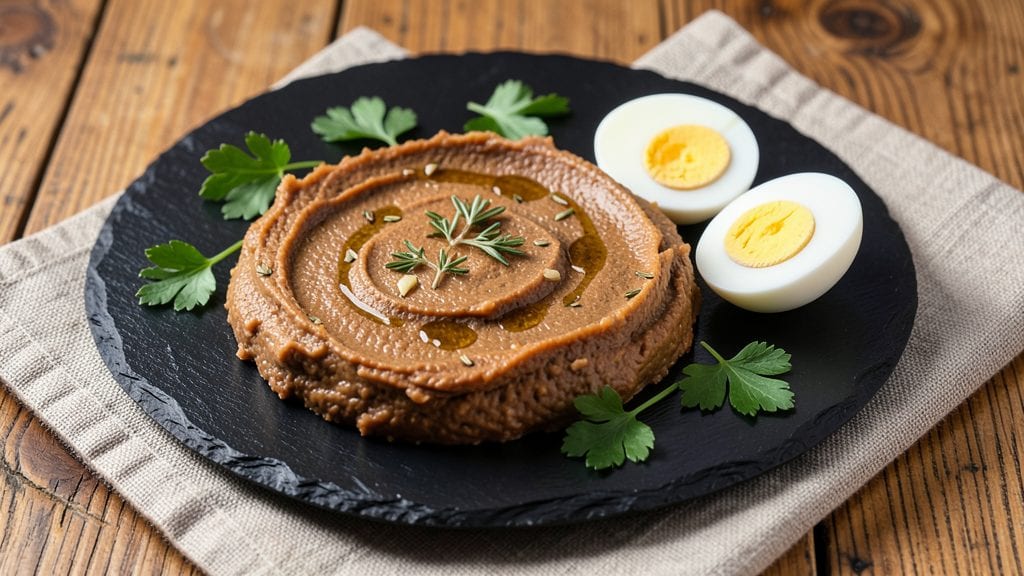
Mastering this chicken liver pâté recipe with hard-boiled eggs transforms humble ingredients into a luxurious breakfast centerpiece—silky, rich, and packed with depth. The secret lies in rendering the fat properly and blending livers with yolks until velvety smooth, creating a texture that’s both elegant and satisfying.
I perfected this version after years of working with French terrine techniques, adapting them for home cooks with a modern twist.
What sets this recipe apart is the balance of techniques: traditional French pâté methods meet approachable home cooking. You’ll render the livers’ fat to create a luxurious base, then fold in hard-boiled eggs for creaminess and structure.
The result is a pâté that’s stable enough to slice neatly but rich enough to stand alone as a first-course masterpiece. Most recipes skip the egg step, but it’s the game-changer for texture and cohesion.
By the time you’re done, you’ll have a pâté that’s silky-smooth, with a deep umami flavor from the livers and a subtle eggy richness that makes every bite irresistible. Serve it chilled on toasted baguette slices, paired with cornichons and mustard, or as an elegant appetizer for brunch guests.
The best part? It comes together in just 30 minutes, with minimal effort but maximum impact.
This isn’t just a recipe—it’s a technique you’ll use again and again. The same method works for duck liver pâté or even a vegetarian version with mushrooms and walnuts. Once you master the fundamentals here, you’ll unlock a world of possibilities for rich, spreadable textures that elevate any meal.
Let’s get started with the foundational steps that make this pâté shine.
Ingredients for chicken liver pate recipe with hard boiled eggs
French-inspired elegance begins with these twelve carefully selected ingredients—rich, umami-packed, and balanced for velvety perfection.
| Ingredient | Amount | Notes |
|---|---|---|
| Chicken Livers 🍗 | 1 lb | Fresh, trimmed of connective tissue |
| Large Eggs 🥚 | 4 whole | Hard-boiled, peeled, yolks separated |
| Unsalted Butter 🧈 | ½ cup | European-style preferred for flavor |
| Shallots 🧅 | 2 whole | Finely minced, about 2 tbsp |
| Fresh Thyme Leaves 🌿 | ½ tbsp | Or 1 tsp dried thyme |
| Fresh Parsley Leaves 🌿 | ¼ cup | Finely chopped, for freshness |
| Diamond Crystal Kosher Salt 🧂 | ½ tsp | Adjust to taste |
| Freshly Ground Black Pepper 🌶️ | ¼ tsp | Cracked peppercorns preferred |
| Cognac or Brandy 🍷 | 2 tbsp | High-quality, 80-proof minimum |
| Heavy Cream 🥛 | ¼ cup | Full-fat for optimal texture |
| Baguette 🍞 | 1 whole | For serving, toasted |
| Cornichons 🥒 | ¼ cup | Sliced, for garnish |
| Dijon Mustard 🍯 | 1 tbsp | For serving, optional |
The chicken livers are the heart of this pâté, so prioritize freshness and quality. Look for livers that are deep red, moist, and free of yellowing or off-odors—Whole Foods or local butcher shops typically carry the best selection. Trim any connective tissue or membranes meticulously, as they can impart bitterness. For rendering, use a heavy-bottomed skillet to prevent burning; the fat should render slowly at medium heat, yielding a golden, aromatic base. If you can't find fresh livers, high-quality frozen livers (thawed overnight in the refrigerator) work well, though they may yield slightly less fat. The eggs must be fresh and large—older eggs produce less stable yolks, compromising the pâté's texture.
Substitutions should preserve the pâté's luxurious texture and depth. For cognac, dry sherry or apple brandy (at the same proof) work equally well, though the flavor profile shifts subtly. Out of fresh herbs? Dried thyme and parsley can be used at one-third the quantity, but the pâté will lack brightness. Heavy cream can be substituted with crème fraîche or sour cream for a tangier finish, though the texture will be slightly denser. If you're avoiding eggs entirely (for dietary reasons), mashed avocado or silken tofu can replace yolks, though the result will be less stable. For the shallots, green onions or leeks (finely minced) add a milder sweetness, though they lack the depth of shallots. Always ensure your butter is unsalted and European-style—American-style butter contains more water and lacks the rich flavor profile.
This pâté must be handled with precision to maintain its silky texture. Render the livers' fat immediately after trimming and refrigerate the remaining ingredients until ready to use—livers oxidize quickly, so work efficiently. Once assembled, the pâté should be chilled for at least 4 hours (ideally overnight) to allow flavors to meld and the texture to set properly. Store in an airtight container with a thin layer of plastic wrap pressed directly onto the surface to prevent a skin from forming. It keeps for 5 days in the refrigerator or 3 months in the freezer, though the texture may soften slightly upon thawing. For serving, toast the baguette until crisp and spread the pâté generously—warm slices enhance the butter's richness. Garnish with cornichons and a drizzle of Dijon mustard for a classic French touch.
Why You'll Love This Recipe
- I’ll be real: this takes less time than boiling water for pasta. Just sear the livers in butter, toss in shallots and thyme, then blend with the eggs—no fancy techniques, just hands-on simplicity.
- No-Fuss Prep: I’ll be real: this takes less time than boiling water for pasta. Just sear the livers in butter, toss in shallots and thyme, then blend with the eggs—no fancy techniques, just hands-on simplicity.
- Rich, Unexpected Depth: That crispy shallot edge and earthy thyme? It’s like a hug for your taste buds. The eggs add a silky contrast that makes every bite feel luxurious—no fancy ingredients, just pure satisfaction.
- Weeknight Hero: Spread it on crusty bread for a quick lunch or serve with crackers when unexpected guests show up. Honestly, it’s my go-to for when I’m too tired to cook but still want something impressive.
Step-by-step instructions for chicken liver pate with hard boiled eggs
This refined French technique transforms humble chicken livers into velvety elegance with just 30 minutes of focused effort.
Prepare the Chicken Livers and Hard-Boiled Eggs
Begin by trimming any connective tissue from the 1 lb chicken livers using a sharp knife. Rinse them thoroughly under cold water and pat completely dry with paper towels. This preparation ensures clean flavor and prevents the pate from becoming watery during cooking.
While the livers soak up the salt, prepare the 4 whole large eggs by placing them in a saucepan and covering with cold water by 1 inch. Bring to a boil over high heat, then immediately reduce to a gentle simmer for exactly 10 minutes. Transfer to an ice bath for 5 minutes to halt cooking, then peel and separate yolks from whites. Reserve the yolks for the pate and set aside the whites for garnish if desired.
Cook the Livers and Aromatics
Heat 0.25 cup unsalted butter in a 10-inch skillet over medium heat until foaming subsides. Add the trimmed chicken livers in a single layer and cook undisturbed for 2 minutes until browned on one side. Flip carefully and cook another 2 minutes until fully cooked through - the livers should be firm to the touch and no longer pink in the center.
Remove the livers from the pan and set aside. In the same skillet, add the 2 whole shallots that have been finely minced and cook for 3 minutes until translucent. Stir in 0.5 tbsp fresh thyme leaves and cook for an additional 30 seconds until fragrant. This aromatic base forms the flavor foundation of your pate.
Create the Pate Mixture
Transfer the cooked livers and shallot-thyme mixture to a food processor fitted with the metal blade. Add the separated yolks from the 4 hard-boiled eggs, 0.25 cup heavy cream, 2 tbsp cognac or brandy, 0.5 tsp diamond crystal kosher salt, and 0.25 tsp freshly ground black pepper. Process until completely smooth, scraping down the sides as needed.
With the processor running, slowly drizzle in the remaining 0.25 cup unsalted butter through the feed tube. This creates an ultra-smooth, luxurious texture. Taste and adjust seasoning - you may need additional salt or pepper depending on your brand of cognac. The mixture should be velvety smooth with no visible texture.
Finish and Serve
Transfer the pate mixture to a heatproof ramekin or small baking dish. Place the ramekin in a larger baking dish and pour hot water into the larger dish until it reaches halfway up the sides of the ramekin. This water bath creates gentle heat that cooks the pate gently without curdling.
Bake in a preheated 350°F oven for 15-18 minutes until the center is just set but still slightly wobbly. The pate should be warm throughout but not fully firm - it will continue setting as it cools. Remove from the water bath and let cool to room temperature before refrigerating for at least 2 hours or up to 24 hours.
Assemble and Garnish
To serve, invert the chilled pate onto a serving plate. Garnish with dollops of the reserved egg whites (if using), 0.25 cup chopped fresh parsley leaves, and 0.25 cup sliced cornichons. Serve with 1 tbsp dijon mustard on the side and warm slices of the baguette for spreading.
The pate should have a rich, velvety texture with a perfect balance of livery depth and creamy smoothness. Each bite should deliver the complex flavors of the cognac, thyme, and shallots in perfect harmony. This elegant preparation transforms simple ingredients into a sophisticated French classic that impresses any gathering.
Pro Tips For Making Chicken Liver Pate Recipe With Hard Boiled Eggs
- Blanch Livers First: Drop chicken livers into boiling water for 30 seconds before cooking—this removes blood and bitterness. I learned this the hard way after making a batch that tasted like iron. Rinse them well under cold water afterward.
- Shred Eggs Roughly: Tear hard-boiled eggs into uneven chunks, not tiny crumbles—you want texture, not mush. My grandmother swore by this, and she was right: big pieces hold up better in the pate and give each bite contrast.
- Sweat Shallots Low: Cook shallots in butter on the lowest heat possible until translucent, not browned—this keeps them silky, not bitter. After burning three batches, I finally figured out that patience here makes a real difference.
- Chill Before Serving: Let the pate set for at least 2 hours in the fridge—this firms it up for clean slices. I skip this when I'm lazy, but the dish is noticeably better when I don’t. (Yes, even if you're impatient like me.)
Serving suggestions for this dish
Baguette Presentation
Toast ½-inch slices of a rustic baguette in a 400°F oven for 5 minutes until golden and crisp. Spread with the pâté using a serrated knife—press gently to create clean, even lines. For extra flair, drizzle with Dijon mustard in zigzags before adding the pâté.
I always serve this with a small bowl of mustard on the side so guests can adjust to their taste. 🥖
Classic French Garnishes
Fresh cornichons (thinly sliced) add a tangy crunch that cuts through the richness. Scatter ¼ cup chopped parsley over the top for brightness, and finish with a sprinkle of freshly cracked black pepper.
For a refined touch, pipe a ring of crème fraîche around the pâté before serving. The contrast of textures—creamy, crunchy, and smooth—elevates every bite.
Brunch Pairings
Serve alongside poached eggs on buttered toast for a hearty brunch. The runny yolks complement the pâté’s depth, while the eggs’ freshness balances its richness. For a lighter option, pair with a mixed greens salad dressed with a lemon vinaigrette.
The acidity cleanses the palate between bites. I often set out a small plate of radishes and cucumber slices for extra freshness. 🥚
Wine and Cocktail Pairings
A crisp Sauvignon Blanc from the Loire Valley—like Domaine Fouassier—highlights the pâté’s herbal notes and cognac undertones. For cocktails, a gin and tonic with a twist of lemon brightens the meal.
Avoid heavy reds; they’ll overpower the delicate flavors. If you’re serving this as an appetizer, a chilled rosé (like Whispering Angel) is a crowd-pleaser. 🍷
Make-Ahead Serving
This pâté tastes even better the next day, so prepare it ahead for gatherings. Store in an airtight container in the fridge for up to 5 days. When ready to serve, let it sit at room temperature for 20 minutes before slicing.
For parties, assemble the baguette and garnishes separately and arrange everything on a platter just before serving. This keeps the bread crisp and the pâté at its best. ✨
Modern Twists
For a fusion twist, serve the pâté on toasted brioche with a drizzle of honey and crushed walnuts. The sweetness contrasts beautifully with the savory liver. Another idea: spread it on avocado toast for a lighter, trendy option.
I’ve also seen it work well with seeded crackers for a more casual vibe. Don’t be afraid to experiment—this pâté is versatile enough to adapt to any occasion. 💡
Nutrition facts
Frequently asked questions
Why do hard-boiled eggs make this pâté different from traditional recipes?
The eggs add a luxurious creaminess that stabilizes the texture while balancing the liver's richness. Traditional pâtés rely solely on butter and cream, but the yolks here create a velvety, almost mousse-like consistency that holds its shape beautifully when chilled. Plus, they contribute subtle eggy depth that complements the cognac and thyme.
Can I substitute duck livers instead of chicken livers?
Duck livers are richer and more intense in flavor, so you'll want to reduce the cognac to 1 tbsp instead of 2 tbsp to balance the depth. The cooking time remains the same, but be extra careful not to overcook them—they should be just firm when done. This version works beautifully with duck, especially if you're aiming for a more decadent brunch centerpiece.
What's the best way to store leftover pâté?
Transfer to an airtight container with plastic wrap pressed directly on the surface to prevent drying. It keeps for 5 days in the fridge or 3 months in the freezer. For serving, let it sit at room temperature for 20 minutes before slicing—this makes it easier to cut cleanly. The texture may soften slightly after freezing, but reheating in a 350°F water bath for 10 minutes restores it.
Can I make this pâté without eggs for dietary reasons?
Yes! Replace the yolks with ½ cup mashed avocado or ½ cup silken tofu blended until completely smooth. For texture, add 1 tbsp cornstarch to thicken the mixture. The flavor will be slightly different (less rich), but the technique remains the same. You may need to reduce the heavy cream to ¼ cup to maintain balance.
What's the secret to getting perfectly smooth pâté?
Process the mixture in short bursts (30 seconds on, 30 seconds off) to prevent overheating, which can turn it grainy. Use a food processor with a metal blade, and scrape down the sides frequently. The key is patience—don't rush the blending. Also, ensure all ingredients (especially butter) are at room temperature before combining.