Main Courses
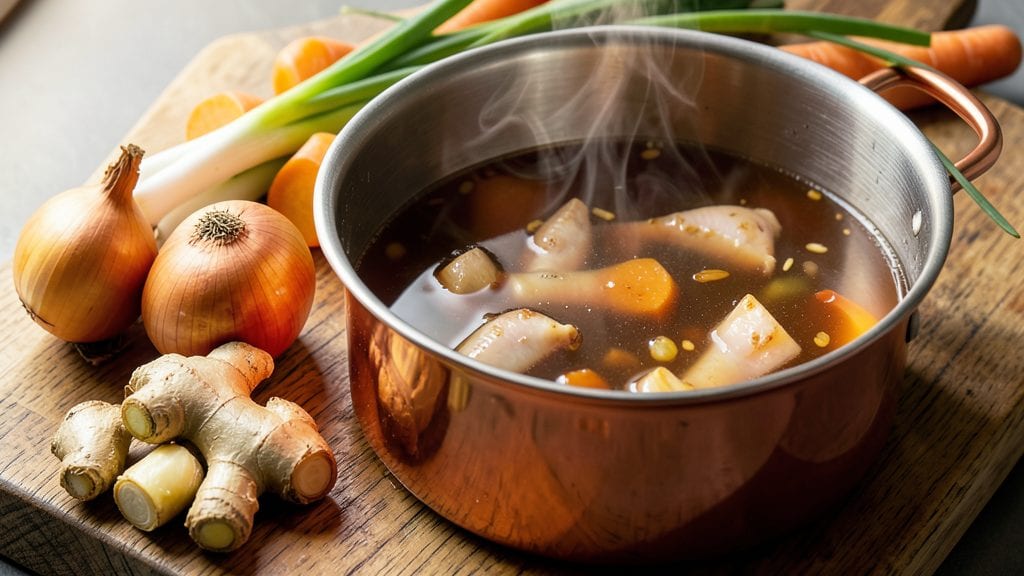
Creating a chicken feet stock recipe unlocks a world of deep umami flavor that elevates soups, stews, and braises to restaurant-quality levels. This traditional technique transforms tough connective tissue into a rich, gelatinous broth packed with collagen and natural sweetness—perfect for pho, ramen, or hearty braises.
The slow simmering process extracts every nuance, turning simple ingredients into a flavor foundation that’s worth the time investment.
The beauty of chicken feet stock lies in its simplicity and versatility. With just a few aromatics—garlic, ginger, and scallions—and a long cooking time, you’ll build layers of savory depth that store-bought broths can’t match.
Whether you’re using a slow cooker, pressure cooker, or stovetop, the key is patience: letting the collagen dissolve over hours creates that signature velvety texture. This stock isn’t just for Asian cuisine—it’s a secret weapon for any dish needing a rich, umami base.
What you’ll end up with is a golden, aromatic liquid that’s far more complex than basic chicken broth. The gelatin from the feet gives it body, while the slow cooking caramelizes natural sugars for a subtle sweetness.
Strain it carefully to remove any impurities, then store it in the fridge or freezer for up to three months. The result? A flavorful liquid that transforms simple recipes into something extraordinary—every spoonful packed with depth and satisfaction.
Ready to transform your cooking? This stock is the ultimate flavor multiplier, turning ordinary meals into something special. Let’s get started with the step-by-step process to create your own umami-rich foundation. The effort pays off in every bowl.
Ingredients for chicken feet stock
Simple ingredients, deep umami magic—this stock transforms tough bits into liquid gold.
| Ingredient | Amount | Notes |
|---|---|---|
| Chicken Feet 🦶 | 2 lbs | Cleaned, trimmed of excess skin |
| Yellow Onions 🧅 | 2 whole | Peeled, quartered, root end intact |
| Garlic Cloves 🧄 | 8 cloves | Peeled, smashed for stronger flavor |
| Fresh Ginger 🌿 | 2 oz | Peeled, sliced into thick coins |
| Scallions 🧅 | 1 bunch | White and green parts separated |
| Carrots 🥕 | 4 whole | Peeled, cut into 2-inch chunks |
| Celery Stalks 🥬 | 4 whole | Trimmed, cut into 2-inch pieces |
| Bay Leaves 🌿 | 4 whole | Dried, standard supermarket variety |
| Black Peppercorns 🌶️ | 1 tbsp | Crushed lightly in mortar or bag |
| Salt 🧂 | 1 tbsp | Kosher or sea salt preferred |
| Apple Cider Vinegar 🍎 | 1 tbsp | For initial flavor extraction |
| Cold Water 💧 | 12 cups | Enough to cover ingredients |
Chicken feet are the star here. Look for clean, trimmed feet at Asian markets or well-stocked butchers—they’re often sold frozen. Costco or H Mart usually carry them year-round. If you can't find them fresh, frozen works perfectly (just thaw overnight). The key is avoiding any skin or debris—rinse them well under cold water. For the aromatics, garlic and ginger should be fresh—no powdered shortcuts. The ginger's heat balances the richness, while the garlic adds sweetness as it cooks down.
No fresh ginger? Substitute 1 tbsp ground ginger, but you'll lose that caramelized depth. Short on scallions? Extra onion or leek works, but the green tops add freshness. The vinegar might sound odd, but it kicks off flavor extraction right away—don't skip it. For the vegetables, carrots and celery can be swapped for fennel or leeks if you prefer. The bay leaves? Fresh ones are better, but dried are fine in a pinch. If you're using a pressure cooker, reduce the water by 2 cups—it builds pressure faster.
This stock gets better with time. Strain through a fine-mesh sieve into a clean container—discard the solids. For maximum clarity, skim fat periodically during cooking. Store in the fridge for up to 5 days or freeze in 1-cup portions for 3 months. The gelatin thickens as it cools, so shake before using. I always make a double batch—one for immediate use, one to freeze. The first batch often gets used in pho, the second in braises where it disappears into the sauce.
Why You'll Love This Recipe
- No Prep Fuss: I swear by this stock—just toss in the chicken feet, a few chopped onions, and a hunk of ginger, then let the pot do the work. No peeling, no mincing, no stress. Honestly, the hardest part is waiting for it to simmer down.
- Umami Bomb: That first sip? Pure flavor payoff. The chicken feet dissolve into a rich, gelatinous broth while the garlic and ginger sear just enough to layer in depth—savory, slightly sweet, with a whisper of heat. It’s the kind of taste that makes you pause mid-slurp.
- Stockpile Savings: Between us, this recipe is my budget hack. A pound of chicken feet runs cheaper than store-bought stock, and you’ll end up with gallons of it. Freeze what you don’t use—perfect for future soups, braises, or even ramen. No waste, all win.
- Weeknight Magic: I make this when I’m too tired to think, and it’s always there when I need it. Throw it into a quick stir-fry, drizzle it over rice, or sip it straight from the pot. It’s the ultimate lazy-day ingredient that somehow feels fancy. (Yes, even on a Tuesday night.)
Step-by-step instructions for chicken feet stock
Here's how to extract maximum umami from every ingredient—no shortcuts, just deep flavor.
Blanch the Chicken Feet to Remove Impurities
Place the 2 lbs chicken feet in a large stockpot and cover them completely with the 12 cups cold water. Bring to a boil over high heat, then immediately reduce to a simmer for 10 minutes. This initial blanch removes surface impurities and blood that would otherwise cloud your stock.
During this time, you'll notice a faint pink or cloudy tint in the water—this is normal. Once the 10 minutes are up, drain the water completely through a colander, discarding it. Rinse the chicken feet under cold water to remove any residual foam or sediment. This step is crucial; skipping it results in a murky, off-flavored stock that lacks clarity.
Build the Aromatic Base with Vegetables and Spices
Return the blanched chicken feet to the now-empty stockpot. Add the 2 whole yellow onions, 4 whole carrots, 4 whole celery stalks, 8 cloves garlic cloves, 2 oz fresh ginger, 4 whole bay leaves, 1 tbsp crushed black peppercorns, and 1 tbsp salt. Pour in enough fresh cold water to cover everything by about 2 inches—you should use approximately 12 cups again.
Bring the mixture to a boil over medium-high heat, then immediately reduce to a gentle simmer. The water should bubble softly around the edges with occasional small bursts. Skim off any foam or scum that rises to the surface during the first 15 minutes of simmering using a fine-mesh skimmer or ladle. This ensures a crystal-clear stock free of impurities.
Simmer Low and Slow for Maximum Flavor Extraction
After the initial skimming, partially cover the pot with a lid (leave a small gap for steam to escape) and simmer gently for 4-5 hours. The stock should maintain a low, steady simmer—if it boils vigorously, reduce the heat. You're looking for a temperature where small bubbles occasionally break the surface, not a rolling boil.
Here's where patience pays off: the collagen in the chicken feet and vegetables will break down into gelatin, creating a rich, velvety texture. Stir occasionally to prevent the ingredients from sticking to the bottom. The stock will gradually darken to a deep amber color, indicating proper flavor development. If the water level gets too low, add small amounts of hot water to maintain coverage.
Finish with Vinegar for Brightness and Strain
Once the stock has simmered for 4-5 hours, stir in the 1 tbsp apple cider vinegar. This final addition brightens the flavor by helping extract additional collagen and gelatin from the chicken feet. Let the stock simmer for another 30 minutes after adding the vinegar.
Remove the pot from heat and let the stock sit for 10 minutes to allow any remaining solids to settle. Line a fine-mesh strainer with cheesecloth or a coffee filter for extra clarity, then carefully strain the stock into a large bowl or clean containers. Press gently on the solids to extract every last drop of flavorful liquid. Discard the strained vegetables and chicken feet—they've given everything they've got.
Cool and Store for Long-Term Use
Allow the stock to cool to room temperature, then transfer it to airtight containers. For best results, refrigerate for up to 5 days or freeze in ice cube trays for up to 6 months. The stock will thicken slightly as it cools—this is normal and indicates proper gelatinization.
When ready to use, thaw frozen stock in the refrigerator overnight. This rich, umami-packed base will elevate any soup, stew, or braise you prepare. The deep flavor comes from hours of slow extraction, so don't rush this process—every minute in the pot builds complexity. You'll notice the difference immediately when you use it in recipes.
Pro Tips For Making Chicken Feet Stock
- Blister the Feet First: DESCRIPTION:
- Chop Ginger Like a Bruiser: DESCRIPTION:
- Don’t Rush the Simmer: DESCRIPTION:
- Strain Twice, Skim Once: DESCRIPTION:
Storing and reheating your chicken feet stock
Refrigerator Storage
Your freshly made chicken feet stock will keep beautifully in the fridge for up to 5 days—but the flavor actually deepens over time as the gelatin continues to develop. Transfer the stock to airtight glass containers (I love Le Parfait jars) and let it cool completely before sealing.
The gelatin will thicken slightly, so give it a gentle shake before using to restore its liquid consistency. For maximum clarity, skim any congealed fat from the surface before storing. 💧
Freezer Storage
For long-term use, freeze your stock in 1-cup portions in silicone ice cube trays or mason jars. Leave ½ inch of headspace to prevent expansion cracks—this is critical! Once frozen, transfer the cubes or jars to a freezer-safe bag and label with the date.
This stock maintains its quality for up to 6 months, though I find it’s at its peak within the first 3 months. The gelatin remains intact, so no need to thaw completely before using—just add frozen cubes directly to your recipe. ❄️
Thawing Techniques
Never microwave frozen stock—it destroys the delicate gelatin structure. Instead, transfer your frozen cubes or jars to the refrigerator and let them thaw overnight (8-12 hours). For quicker use, place the sealed container in a bowl of cold water, changing the water every 30 minutes until fully thawed.
Once thawed, shake gently to redistribute any settled gelatin. If you’re in a rush, you can even use frozen cubes directly in soups or stews—they’ll melt completely during cooking. 🕒
Reviving Stale Stock
If your stock has developed an off-flavor or smells slightly stale, don’t toss it! Simmer it gently for 10-15 minutes with a few fresh aromatics—like 1 crushed garlic clove and ½ tsp fresh ginger—to revive its brightness.
For extra richness, add 1 tsp fish sauce or a splash of apple cider vinegar to cut through any funk. This trick works wonders for stock that’s been stored too long or needs a flavor boost before using. 💡
Using in Recipes
This stock shines in dishes where you want deep umami without overpowering flavors. Use it as the base for pho, ramen, or braised short ribs, reducing it by half first to concentrate the flavor.
For soups, add it in the final 10 minutes** of cooking to preserve its gelatinous texture. In stews, use it to deglaze the pan after browning meat—it picks up beautiful caramelized notes.
Even in sauces, a splash of this stock adds an unmatched depth that store-bought broths simply can’t match. 🍜
Nutrition facts
Frequently asked questions
Why do chicken feet make stock so much richer than regular chicken broth?
Chicken feet are packed with collagen and gelatin, which break down during long simmering to create a velvety, jelly-like texture that regular chicken bones can't match. The slow cooking process also extracts natural sweetness and deep umami flavors from the connective tissue, giving your stock that signature restaurant-quality richness.
Can I make this stock in a pressure cooker to save time?
Yes! Use the same ingredients but reduce water by 2 cups and cook on high pressure for 60-75 minutes instead of 4-5 hours. Quick-release the pressure, then strain. The result will be slightly less gelatinous but still deeply flavorful. For maximum collagen extraction, finish with 30 minutes of regular simmering after pressure cooking.
What should I do if my stock smells fishy or off after cooking?
This usually means impurities weren't properly removed during the initial blanch. Strain again through a cheesecloth-lined sieve and simmer with fresh 1 tbsp apple cider vinegar and 1 crushed garlic clove for 15 minutes to neutralize odors. If the smell persists, it's safer to discard and start fresh—off-flavors won't improve with time.
How much stock will this recipe actually yield?
You'll get about 8-10 cups of finished stock from this recipe, depending on how much you skim. The gelatin content makes it thicker than regular broth, so measure before adding to recipes. For soups, use 1:1 ratio with water; for braises, reduce by half first to concentrate flavors. Freeze extras in 1-cup portions for easy measuring later.
Can I use chicken feet stock in non-Asian recipes?
Its rich umami works beautifully in Italian risottos, French braised meats, or even Mexican pozole. The gelatin adds body to sauces, and the deep flavor enhances any dish where you'd normally use beef or pork stock. Try it in place of water when making mashed potatoes for extra creaminess!