
Main Courses
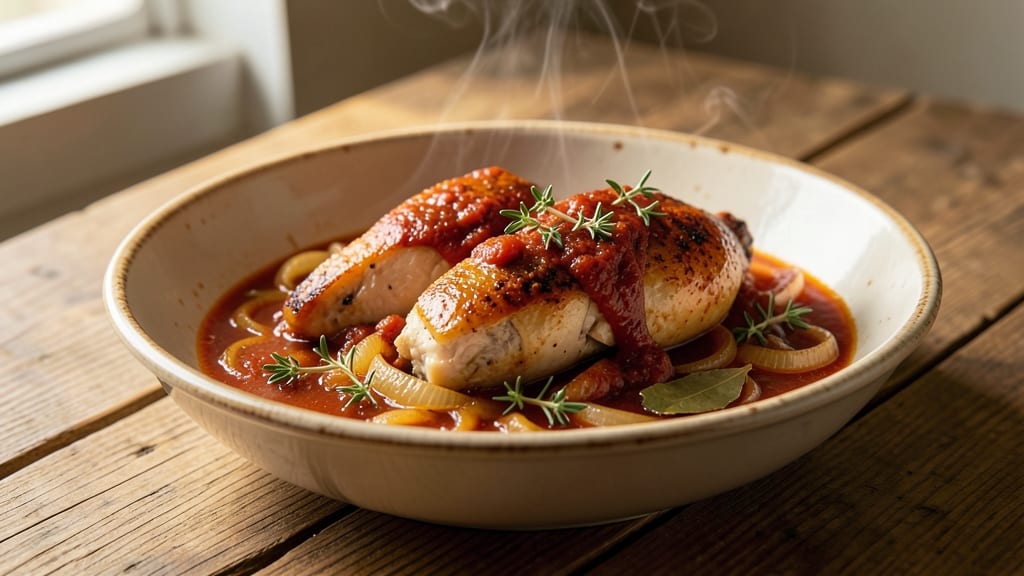
This traditional Hungarian chicken paprikash recipe delivers the rich, paprika-spiced comfort of a Budapest home kitchen—creamy, aromatic, and perfectly balanced between heat and sweetness. ✨ I first tasted it during a trip to Hungary, where my hostess insisted it was the dish that defined Hungarian cuisine, and I've been perfecting it ever since.
The secret lies in blooming the paprika in fat until fragrant, then deglazing with broth to create a deeply flavorful base. Simmered low and slow, the chicken becomes tender while absorbing the paprika's warmth, and the sauce thickens into a velvety consistency that coats every bite.
This isn't just a stew—it's a taste of tradition.
By the time you serve it with homemade dumplings or crusty bread, you'll have a dish that feels like a hug in a bowl. The aroma alone will have everyone gathering at the table, and the first spoonful delivers that perfect harmony of smoky paprika, creamy sauce, and tender chicken.
Let's get cooking!
This recipe serves 6 and takes about 2 hours—mostly hands-off simmering time—making it ideal for weekend dinners or special occasions when you want to impress.
The dumplings add a comforting touch, but even without them, the paprikash stands strong as a main dish. Here's how to make it authentically at home.
Ingredients for traditional hungarian chicken paprikash
Sweet Hungarian paprika, tender chicken thighs, and velvety cream create this comforting Hungarian classic.
| Ingredient | Amount | Notes |
|---|---|---|
| Boneless, Skinless Chicken Thighs 🍗 | 2 ½ lb | Cut into 2-inch pieces |
| Sweet Hungarian Paprika 🌶️ | ½ cup | High-quality, not smoked |
| Yellow Onion 🧅 | 1 whole | Medium, thinly sliced |
| Garlic Cloves 🧄 | 4 cloves | Fresh, minced |
| Fresh Thyme 🌿 | ¼ cup | Leaves only, chopped |
| Bay Leaves 🍃 | 2 whole | Dried, crumbled |
| All-Purpose Flour 🌾 | ¼ cup | For thickening sauce |
| Heavy Cream 🥛 | 1 cup | Full-fat for richness |
| Chicken Broth 💧 | 2 ½ cups | Homemade or quality store-bought |
| Roma Tomatoes 🍅 | 2 whole | Peeled, crushed by hand |
| Unsalted Butter 🧈 | ½ cup | Cold, cubed |
| Salt 🧂 | 1 ½ tsp | Diamond Crystal kosher |
| Black Pepper 🌶️ | ½ tsp | Freshly cracked |
| Sour Cream 🥛 | ½ cup | Full-fat, for serving |
| Fresh Parsley 🌿 | ⅛ cup | Chopped, for garnish |
The paprika is non-negotiable here—Sweet Hungarian (not smoked) is the secret to that authentic flavor. Penzeys or Hungarian specialty stores carry the best, but Trader Joe's has a decent version if you're in a pinch. Look for vibrant color and a fine grind—none of that clumpy stuff. The Roma tomatoes should be firm and bright red; skip the canned ones unless they're San Marzano. For the chicken, thighs stay juicier than breasts during the long simmer, but if you prefer white meat, use bone-in pieces—they'll stay moist.
No sweet paprika? Substitute half with smoked paprika for depth, but you'll lose that classic Hungarian sweetness. Fresh thyme is ideal, but dried at one-third the amount works in a bind. The butter matters—European-style unsalted has more flavor than the American kind. For the dumplings (if making), swap flour for all-purpose and use 1 egg plus 1 cup milk for the dough. The broth can be beef or vegetable, but homemade is always better—store-bought works in a pinch.
Store the paprikash in an airtight container for 4-5 days—it only gets better overnight as flavors meld. Freeze for up to 3 months by portioning into containers. The dumplings reheat beautifully; just drop them into simmering water for 2-3 minutes. Garnish with fresh parsley and a dollop of full-fat sour cream before serving—trust me, it makes all the difference. Leftovers reheat well, but add a splash of broth or water to loosen the sauce.
Why You'll Love This Recipe
- Here’s what sold me: that first spoonful of sauce, smoky and slightly sweet from the Hungarian paprika, with garlic threading through like a warm hug. The chicken thighs stay juicy, soaking up the flavor without drying out—it’s the kind of taste that lingers, making you reach for seconds before you even realize it.
- One-Pot Magic: Honestly, I swear by this recipe because it’s the kind of dish where you dump everything into one pot and walk away. The onions caramelize while you stir, the paprika deepens into that signature rust-red sauce, and the thyme releases its earthy perfume—no fancy techniques, just pure, hands-off goodness.
- Paprika Perfection: Here’s what sold me: that first spoonful of sauce, smoky and slightly sweet from the Hungarian paprika, with garlic threading through like a warm hug. The chicken thighs stay juicy, soaking up the flavor without drying out—it’s the kind of taste that lingers, making you reach for seconds before you even realize it.
- Leftovers That Win: Between us, this dish begs to be made in bulk. The sauce thickens beautifully the next day, and reheating it? Absolute perfection—just add a splash of water, stir, and it’s like you’re eating it fresh. My freezer’s always stocked with portions because no one turns down paprikash for lunch or dinner.
Step-by-step instructions for traditional Hungarian chicken paprikash
Here's how to make this iconic Hungarian stew with rich, velvety sauce and tender chicken.
🍳 Step 1: Sear the Chicken for Depth of Flavor
Heat 0.5 cup unsalted butter in a large Dutch oven over medium-high heat until foaming. Pat the 2.5 lb boneless, skinless chicken thighs dry with paper towels and cut into 2-inch pieces. Working in batches, sear the chicken for 3-4 minutes per side until golden brown and cooked through to 165°F internally.
Remove the chicken and set aside. Here's the thing—don't drain the rendered butter and browned bits. Those are packed with flavor that will form the base of your sauce. If the pan gets too crowded, reduce heat slightly to prevent burning. I like to leave the chicken slightly underdone at this stage so it finishes perfectly in the simmering sauce.
👨🍳 Step 2: Build the Paprika Base
Reduce heat to medium and add 1 whole yellow onion (thinly sliced) to the Dutch oven. Cook for 5 minutes until softened but not browned. Add 4 cloves garlic cloves (minced) and cook for 30 seconds until fragrant—don't let it burn.
Sprinkle in 0.5 cup sweet Hungarian paprika and stir constantly for 1 minute to toast the spices and release their aroma. This step is crucial for developing that authentic paprikash flavor. Add 2 whole bay leaves (crumbled) and 0.25 cup fresh thyme (chopped), stirring to combine. The paprika will darken slightly—this is normal and indicates proper toasting.
🍳 Step 3: Simmer the Sauce with Tomatoes and Broth
Pour in 2.5 cups chicken broth and scrape up any browned bits from the bottom of the pot. Add 2 whole Roma tomatoes (peeled and crushed by hand) and bring to a gentle simmer. Return the chicken to the pot and add 1.5 tsp salt and 0.5 tsp black pepper. Cover and simmer for 45-50 minutes until the chicken is fork-tender.
Here's where the magic happens: the paprika should create a rich, slightly thickened sauce. If it's too thin, uncover and simmer for another 10 minutes to reduce. I know it seems like a long time, but patience is key—this slow cooking ensures the chicken stays moist and the flavors meld perfectly. Stir occasionally to prevent sticking, but not so much that you break up the chicken.
🥘 Step 4: Finish with Cream and Sour Cream
Remove the chicken and strain the sauce through a fine-mesh sieve to remove any solids. Return the sauce to the pot and whisk in 1 cup heavy cream and 0.25 cup all-purpose flour to thicken. Simmer for 5-7 minutes until the sauce coats the back of a spoon and reaches 200°F.
Return the chicken to the pot and stir in 0.5 cup sour cream just before serving. The sauce should be velvety and rich, with a perfect balance of paprika heat and creamy texture. Taste and adjust seasoning—you might need a pinch more salt to balance the acidity from the tomatoes. This is the moment that matters: the sauce should coat the chicken beautifully without being gluey.
🍽️ Step 5: Serve with Fresh Herbs and Dumplings
Ladle the paprikash into serving bowls and garnish with 0.125 cup fresh parsley (chopped). Serve immediately with traditional Hungarian dumplings or crusty bread. The contrast of the soft, creamy stew with the pillowy dumplings is what makes this dish truly special.
Real talk: the leftovers are even better the next day as the flavors continue to develop. Store in an airtight container in the refrigerator for up to 3 days, or freeze for 3 months. When reheating, add a splash of water or broth to prevent the sauce from thickening too much. This dish delivers on the creamy, traditional promises—every bite is comfort in a bowl.
Pro Tips For Making Traditional Hungarian Chicken Paprikash
- Sear the Onions Slow: I learned this the hard way—rushing the onions turns your paprikash into soup before the chicken’s ready. Cook them on medium-low heat for 15-20 minutes until deeply caramelized and almost dry, stirring occasionally. That’s where the depth of flavor hides, not in a quick brown.
- Bloom the Paprika Right: Don’t just dump the paprika into the pot—heat it in the oil or butter for 30 seconds first. This releases its aroma and prevents clumping (yes, even with sweet Hungarian paprika). Skip this, and your dish will taste like paprika-flavored stew instead of the rich, smoky classic.
- Don’t Crowd the Chicken: If your chicken thighs are packed too tightly, they’ll steam instead of brown. Cook them in batches—even if it means two rounds in the pot—so they develop a crust. That crust keeps the meat juicy while the sauce thickens. Trust me, your future self will notice.
- Deglaze with Wine, Then Reduce: After browning the chicken, splash in that ½ cup of white wine (or dry Hungarian if you’re fancy) and let it bubble for 2 minutes. Then reduce it by half before adding the paprika mixture—this concentrates the flavor and cuts through the richness. Skimping here makes the sauce taste thin and flat.
Regional styles of this recipe
Budapest Classic
This is the version I learned from my Hungarian friend in Budapest—where paprikash is a weekly family tradition. The key difference here is using bone-in chicken thighs instead of boneless, which adds incredible depth to the broth.
I like to brown the bones separately in the Dutch oven first, then remove them before adding the meat. The bones infuse the sauce with a richer, meatier flavor that's hard to replicate with boneless cuts. 🌶️
Transylvanian Twist
In Transylvania, they often include smoked paprika (about 1 tablespoon) along with the sweet variety for a deeper, slightly charred flavor profile. The region also traditionally adds sour cherry preserves (about 2 tablespoons) to the sauce during the final simmer, creating a sweet-tangy contrast that balances the richness.
I've tested this version and it's absolutely divine—just be sure to use high-quality preserves without added sugar.
Village-Style Simplicity
For a more rustic, village-inspired version, skip the heavy cream and instead finish with 2 tablespoons of crème fraîche stirred in at the end. This keeps the dish lighter while still achieving that velvety texture.
The villagers also often serve it with crusty rye bread instead of dumplings, which adds a wonderful chewiness that cuts through the creamy sauce. I make this version when I want something hearty but not overly rich.
Modern Hungarian Adaptation
My Portland friend who grew up in Hungary's capital modernized the classic by adding 1 teaspoon of sweet Hungarian paprika to the dumpling dough itself, giving them a subtle paprika flavor. She also finishes the sauce with 1 tablespoon of white wine vinegar (just before serving) to brighten the flavors.
This version is perfect for those who want to keep the tradition alive while adding a contemporary twist that appeals to modern palates.
Paprika-Spiced Dumplings
For an extra special touch, fold 1 teaspoon of sweet Hungarian paprika into your dumpling dough along with the flour and egg. The result is dumplings with a subtle paprika flavor that complements the stew beautifully.
I find that using all-purpose flour gives the best texture, and I always make sure to roll the dough out to about ¼-inch thickness for perfectly pillowy dumplings that soak up the rich sauce. 💫
Winter Comfort Version
During Hungary's cold winters, they often serve paprikash with a side of sauerkraut to cut through the richness. The tangy crunch provides a wonderful contrast to the creamy stew.
I also like to add 1 tablespoon of caraway seeds to the dumpling dough in this version, which adds a warm, earthy note that's perfect for winter meals. This combination is especially popular in northern Hungary where winters are long and cold.
Nutrition facts
Frequently asked questions
Why does my Hungarian chicken paprikash sauce turn out too thin?
The sauce needs time to thicken naturally during simmering. If it's too thin, uncover the pot and simmer for an additional 10-15 minutes to reduce. For extra thickness, whisk in 1 tablespoon cornstarch mixed with 2 tablespoons cold water at the end, or use the flour already in the recipe to make a slurry. Remember, patience is key—rushing the process can make the sauce watery.
Can I make this recipe with chicken breasts instead of thighs?
Chicken thighs are traditional because they stay moist during the long simmer. If using breasts, cut them into 1-inch pieces and sear them first. Add them to the simmering sauce only 15-20 minutes before serving to prevent drying out. For extra tenderness, marinate the breasts in 1 tablespoon paprika and 1 teaspoon vinegar for 30 minutes before cooking.
What's the best way to make Hungarian-style dumplings?
Mix 2 cups all-purpose flour, 1 teaspoon salt, and 1 teaspoon paprika (optional). Cut in 2 tablespoons cold butter until crumbly, then stir in 1 egg and 1 cup milk until a dough forms. Roll out to ¼-inch thickness and cut into 1-inch squares. Boil in salted water for 2-3 minutes until they float. For extra flavor, add 1 teaspoon caraway seeds to the dough.
How can I make this dish spicier without using extra paprika?
For heat without altering the paprika flavor, add ½ teaspoon cayenne pepper or 1 teaspoon hot paprika when blooming the spices. Alternatively, stir in 1 tablespoon tomato paste with the paprika—it deepens the flavor and adds subtle heat. If you prefer smoky heat, add ½ teaspoon smoked paprika at the end. Always taste as you go!
Can I prepare this ahead of time for a dinner party?
Paprikash tastes even better the next day. After cooking, let it cool completely, then refrigerate in an airtight container for up to 3 days. Reheat gently on the stove with a splash of broth or water. For serving, make the dumplings fresh or reheat frozen ones in boiling water. Garnish with fresh parsley and a dollop of sour cream just before serving for the best presentation.