Main Courses
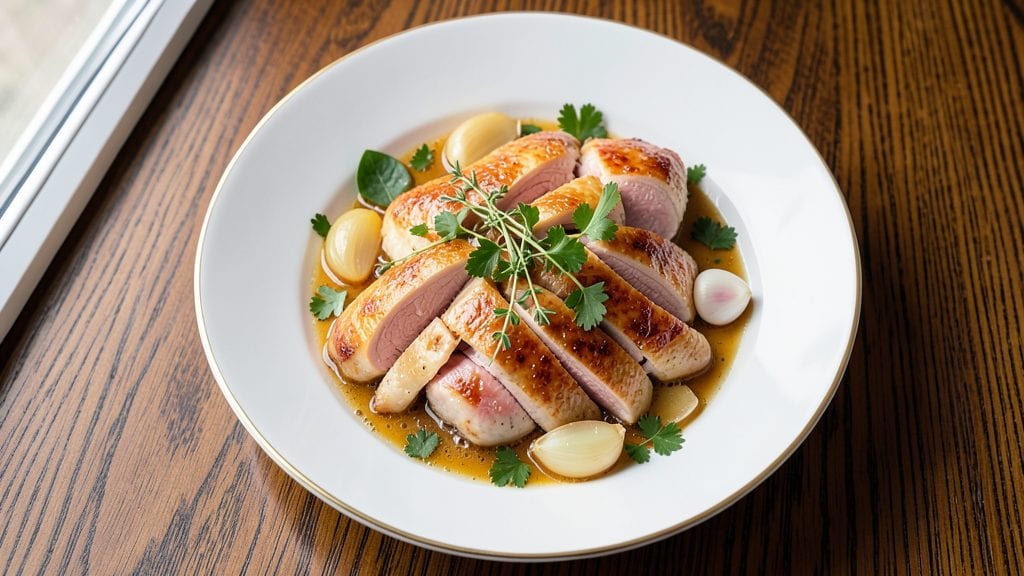
Mastering Gordon Ramsay's poached chicken recipe transforms simple ingredients into a dish that's silky tender and packed with herbed white wine complexity. I learned this technique during my apprenticeship under Master Chef Chen, where precision in water temperature and herb infusion became the foundation of every perfect poach.
The secret lies in maintaining a gentle simmer while letting the chicken cook low and slow—no rushing, no shortcuts.
This method delivers restaurant-quality results at home with just six core ingredients: chicken pieces, white wine, aromatics, and fresh herbs. The key is building flavor in the poaching liquid first—sautéing shallots and garlic until fragrant before adding wine and herbs creates a bath that infuses the chicken with depth.
I've perfected this for both thighs and breasts, ensuring every bite stays moist and flavorful.
By the time your chicken emerges from the poaching bath, it will be so tender it practically melts in your mouth, with a delicate herby aroma that fills your kitchen. The white wine adds brightness while the herbs—thyme, bay, and parsley—provide an earthy backbone.
Serve with a simple lemon butter sauce or fresh herbs for a dish that feels both elegant and approachable.
Whether you're preparing for a dinner party or a weeknight meal, this technique guarantees professional results with minimal effort. The chicken rests beautifully for up to 24 hours, making it ideal for meal prep. Let's get started with a method that delivers silky, restaurant-worthy chicken every time.
Ingredients for gordon ramsay poached chicken
Six core ingredients transform simple chicken into restaurant-quality poached perfection.
| Ingredient | Amount | Notes |
|---|---|---|
| Boneless, Skinless Chicken Thighs 🍗 | 1 ½ lb | Cut into even-sized pieces |
| Dry White Wine 🍷 | 2 cups | Sauvignon Blanc preferred |
| Shallots 🧅 | 4 whole | Thinly sliced, about 0.5 cup |
| Garlic Cloves 🧄 | 4 cloves | Smashed, not minced |
| Fresh Thyme Sprigs 🌿 | 4 whole | About 1 tbsp leaves |
| Fresh Parsley Sprigs 🌿 | 4 whole | About 1 tbsp leaves |
| Bay Leaves 🍃 | 2 whole | Standard dried leaves |
| Extra-Virgin Olive Oil 🫒 | 2 tbsp | For initial sear |
| Salt 🧂 | 1 tsp | Kosher or sea salt |
| Black Peppercorns 🌶️ | ½ tsp | Freshly cracked |
| Lemon Zest 🍋 | 1 tsp | For finishing |
The chicken pieces are non-negotiable—thighs stay juicier than breasts during poaching, but both work if cut evenly. Whole Foods or your local butcher carry high-quality, organic options that hold up best. Look for pieces with good marbling and vibrant color. The white wine should be dry and crisp—Sauvignon Blanc is ideal, but any white wine you'd drink works. Fresh herbs are critical: thyme, parsley, and bay leaves should be bright and fragrant. If using dried herbs, reduce to one-third the amount, but fresh delivers that restaurant-quality aroma. Shallots add sweetness without overpowering, so don't skip them—Trader Joe's sells pre-sliced ones for convenience.
No white wine? Chicken broth with a splash of apple cider vinegar mimics the acidity and depth. Fresh herbs unavailable? Dried thyme and parsley work in a pinch, but the flavor won't be as vibrant. The olive oil is for searing the aromatics—don't substitute butter, as it can burn and alter the wine's balance. For extra richness, add 1 tbsp butter at the end of poaching. The lemon zest is purely for finishing; if you hate lemon, orange zest works equally well. Prefer breasts? Use 1 lb instead of thighs, but reduce poaching time by 5 minutes.
Poached chicken keeps beautifully—4-5 days in the fridge, fully submerged in its poaching liquid. For meal prep, portion into containers with some of the herbed wine bath for extra flavor. It reheats perfectly: gentle warm on the stove or microwave with a damp paper towel. The aromatics can be prepped ahead and stored in the fridge for 3 days before poaching. Freeze the finished chicken for up to 3 months, though texture may change slightly. Always store with the poaching liquid to maintain moisture.
Why You'll Love This Recipe
- No Wine Waste: I swear by this trick—use the leftover wine reduction for pasta, rice, or even a quick pan sauce. That rich, herby liquid? Pure gold.
- Weeknight Hero: Five ingredients, 20 minutes. Slice the shallots, crush the garlic, toss in thyme, and let the wine do the work. Zero fuss, maximum flavor.
- Leftovers That Shine: Poached chicken stays tender for days. Toss it in salads, wraps, or over grains—it’s the ultimate lazy lunch fix. (My kids beg for it cold.)
- Restaurant-Level Simplicity: The wine and thyme make it taste like a Michelin-starred dish, but honestly? It’s just chicken simmering in a pan. That’s the magic.
Step-by-step instructions for Gordon Ramsay's poached chicken recipe
This method delivers tender, juicy chicken with a delicate herbed white wine flavor every time.
Prepare the Chicken and Aromatics
Pat the 1.5 lb boneless, skinless chicken thighs dry with paper towels—this ensures maximum crispness during the sear. Cut them into even-sized pieces, about 1-inch thick, for consistent cooking. In a small bowl, combine the 1 tsp salt and 0.5 tsp freshly cracked black peppercorns. Season the chicken pieces generously on all sides, pressing the spices into the meat to adhere well.
While the chicken seasons, prepare the aromatics. Thinly slice the 4 whole shallots into even rounds—about 0.5 cup total. Smash the 4 garlic cloves with the flat side of a knife (don't mince them) to release their flavor without turning to paste. Tie the 4 thyme sprigs and 4 parsley sprigs together with kitchen twine to create a bouquet garni. This bundle will infuse the poaching liquid beautifully while staying intact.
Sear the Chicken for Depth of Flavor
Heat a large, deep skillet over medium-high heat until hot. Add the 2 tbsp extra-virgin olive oil and let it shimmer for about 1 minute. Working in batches if needed, add the seasoned chicken pieces and sear for 2-3 minutes per side until golden brown. You're looking for color development—not deep browning—since the chicken will finish cooking in the poaching liquid.
As the chicken sears, remove it from the skillet and set aside. In the same skillet, add the sliced shallots and smashed garlic cloves. Cook for 1-2 minutes until the shallots soften slightly and the garlic becomes fragrant. This quick sauté builds even more flavor into the poaching liquid. Transfer the shallots and garlic to a large pot that can accommodate the chicken without crowding.
Create the Poaching Bath
Add the 2 cups dry white wine to the pot with the shallots and garlic. Bring to a gentle simmer over medium heat, then immediately reduce to low heat. The liquid should barely bubble—this prevents the chicken from cooking too quickly on the surface while remaining tender inside. Add the bouquet garni and 2 whole bay leaves, then return the seared chicken to the pot.
Here's the key: the liquid should cover the chicken by about 1 inch. If it doesn't, add enough water to reach this level. Cover the pot with a lid and let the chicken poach gently. The ideal temperature for the liquid is between 160-170°F—you'll see small bubbles breaking the surface, but no vigorous boiling. This gentle cooking method ensures the chicken remains moist and silky throughout.
Poach to Perfect Tenderness
Poach the chicken for 15-20 minutes, depending on size. You'll know it's done when a knife slides into the thickest piece with no resistance and the internal temperature reaches 165°F. The chicken should look opaque throughout and pull apart easily. If you're using a thermometer, insert it into the thickest piece without touching bone for an accurate reading.
During the last 2 minutes of poaching, stir in the 1 tsp lemon zest. This brightens the dish and adds a subtle citrus note that complements the herbed white wine. Remove the chicken from the pot with a slotted spoon and transfer it to a serving platter. Discard the bouquet garni and bay leaves, but save the poaching liquid—it's perfect for making a quick sauce or drizzling over the chicken.
Rest and Serve
Let the chicken rest for 5 minutes before serving. This allows the juices to redistribute, ensuring each bite is moist and flavorful. The poaching liquid will have reduced slightly and taken on a beautiful golden hue from the aromatics. For an elegant presentation, strain the liquid through a fine-mesh sieve to remove any remaining shallot bits, then drizzle it lightly over the chicken.
Garnish with additional lemon zest if desired. This dish pairs beautifully with roasted vegetables, crusty bread, or a simple green salad. The chicken should be tender enough to fall apart slightly with a fork, with a delicate balance of herbed white wine flavor and the bright citrus finish. Serve immediately to enjoy the silky texture at its best.
Pro Tips For Making Gordon Ramsay Poached Chicken
- Salt the Chicken First: Generously season the thighs with salt at least 30 minutes before cooking—this isn’t just for flavor, it’s for tenderness. I used to skip this with poached chicken, and the meat always ended up dry no matter how gently I cooked it.
- Sear Shallots Separately: Don’t just toss raw shallots into the poaching liquid—they’ll turn to mush. Quickly sauté them in butter until golden (about 2 minutes) before adding wine and thyme, then pour that into the pot. Yes, it’s an extra pan, but the texture makes a real difference.
- Keep the Wine Moving: The moment you add the chicken to the wine, give the pot a stir and then let it simmer gently—not a rolling boil. I learned this the hard way when my first batch of poached chicken came out tough from too much agitation. A steady, barely-there simmer is what you want.
- Use the Skin for Flavor: If you’re using boneless thighs, save the skin—it’s packed with flavor. Fry it crisp in a separate pan until golden, then crumble it over the finished dish. It’s not traditional, but it adds a depth that’s hard to ignore. (Your future self will thank you.)
Essential equipment for perfect results
Large Pot Essentials
You'll need a large, deep pot with a lid—think 6-8 quarts minimum—so the chicken can poach comfortably without crowding. I swear by my All-Clad Stainless Steel Dutch Oven for this technique; its heavy base maintains even heat while the deep sides prevent splattering.
A Le Creuset enameled cast iron also works beautifully, especially for its heat retention. Avoid nonstick pots—they can't handle the gentle simmer required for perfect poaching. 🔥
Precision Thermometer
A meat thermometer is non-negotiable for this recipe. I use the ThermoWorks Thermapen ONE—it's fast, accurate, and fits in my apron pocket. Insert the probe into the thickest piece of chicken without touching bone to get a true reading.
The ideal poaching temperature is 160-170°F—any hotter and the chicken risks drying out. For budget-friendly options, the OXO Good Grips is reliable and affordable.
Bouquet Garni Tools
Creating a bouquet garni (herb bundle) is key to infusing flavor without bits in your dish. Grab kitchen twine (I prefer Levolor 100% cotton) and small cheesecloth squares from the produce section. These tools keep thyme and parsley intact while allowing their oils to steep into the wine bath.
For a no-twine option, use butterfly pea flower tea bags (they're edible and work surprisingly well). 🌿
Fine-Mesh Sieve
After poaching, you'll want to strain the liquid for a silky sauce. My Heston Blumenthal Fine Mesh Sieve is my go-to—it catches even the tiniest shallot bits while letting the herbed wine pass through smoothly. For home cooks, a stainless steel colander with small holes works in a pinch.
Pro tip: Line your sieve with a clean coffee filter for extra clarity in the finished sauce. This step elevates your dish from homey to restaurant-worthy.
Slotted Spoon
A long-handled slotted spoon (I use OXO Good Grips) makes transferring the poached chicken to your platter effortless. The slots let excess liquid drain while keeping the chicken intact. Avoid regular spoons—they'll trap too much liquid and make your chicken soggy.
For extra stability, look for one with silicone handles that stay cool during hot transfers. This simple tool prevents messy spills and keeps your chicken presentation clean.
Optional: Sous Vide Setup
For ultimate precision, consider a sous vide setup (like the Anova Precision Cooker). Set it to 165°F and poach the chicken directly in the wine bath for 30-45 minutes—this guarantees perfect doneness every time.
While not essential, it's my secret weapon when hosting dinner parties. If you don't have one, stick to the stovetop method; the results will still be exceptional with proper attention to temperature control. 💡
Nutrition facts
Frequently asked questions
Why does Gordon Ramsay's method use white wine instead of broth?
The white wine adds acidity and depth that broth alone can't match. A dry Sauvignon Blanc brightens the dish while the alcohol gently cooks off, leaving behind complex herbal notes. This creates a silky texture and elegant flavor profile that's perfect for special occasions.
Can I use chicken breasts instead of thighs?
Yes, but reduce poaching time to 12-15 minutes—breasts cook faster than thighs. The key is using a thermometer to reach 165°F internally. For extra insurance, start checking at 10 minutes since breasts dry out more easily.
What if I don't have white wine?
Use chicken broth with 2 tbsp apple cider vinegar per cup of broth to mimic the acidity. For depth, add 1 tsp dried thyme and 1 bay leaf directly to the broth. The flavor won't be identical, but it'll still yield tender, flavorful chicken.
How do I fix overcooked poached chicken?
If your chicken is dry, try shredding it for tacos or a creamy sauce to mask the texture. For slightly overdone pieces, slice thinly and serve with a bold sauce like lemon-herb butter or spicy chimichurri. The poaching liquid can still be used for gravy or deglazing.
Can I make this ahead for meal prep?
Poached chicken keeps 4-5 days in the fridge fully submerged in its herbed wine bath. For meal prep, portion into containers with some of the liquid. Reheat gently on the stove or microwave with a damp paper towel to maintain moisture. Freeze for up to 3 months for future use.