
Appetizers
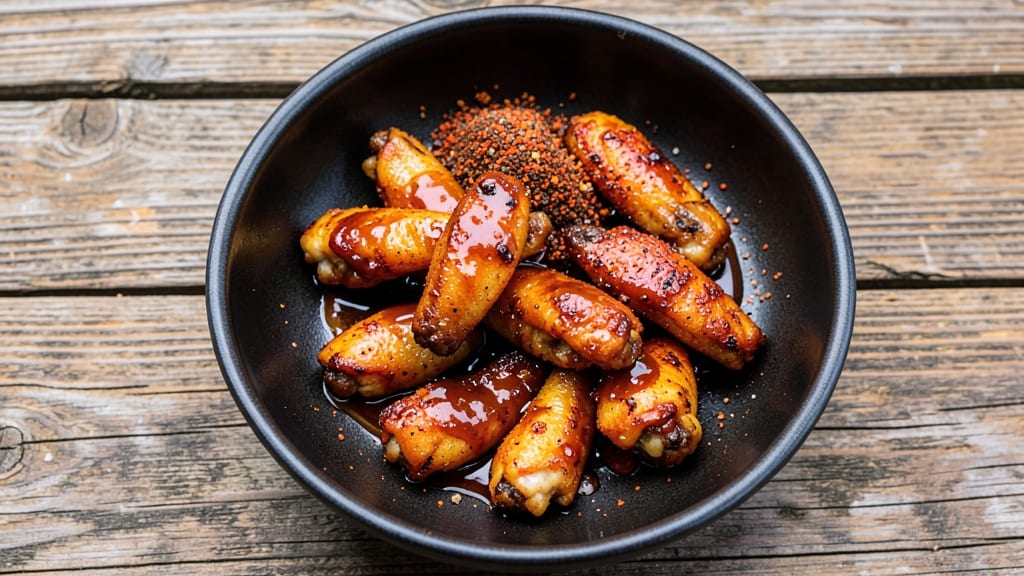
Mastering a chicken wings barbecue recipe that delivers smoky-sweet perfection starts with a dry rub that clings like second skin and a glaze that caramelizes into sticky, finger-licking goodness.
Growing up in small-town Georgia, I learned that great wings aren't just about heat—they're about balance, where the smolder of hickory smoke meets the deep caramel notes of a slow-cooked vinegar-based sauce. This method transforms tough chicken into tender, crisp-edged wings that hold their shape and flavor through every bite.
The secret lies in the two-stage process: first, a 30-minute dry rub of smoked paprika, brown sugar, and cayenne to build a flavorful crust, then a 15-minute glaze of apple cider vinegar, molasses, and brown sugar that locks in moisture while creating that signature sticky glaze.
Unlike quick-baked wings, this recipe demands patience—low-and-slow cooking at 275°F for 2 hours ensures the meat stays tender while the glaze develops into a glossy, caramelized finish.
By the time you're done, you'll have wings that are crispy on the edges yet juicy inside, coated in a glaze that's sweet enough to satisfy but never overpowering.
The aroma alone will have your guests gathering around the table, and the first bite delivers that perfect harmony of smoky, tangy, and caramelized flavors. This is the kind of wings that make people ask for seconds—and then thirds.
Serve with a side of cool ranch or blue cheese dressing to balance the heat, and don't forget the classic celery and carrot sticks for crunch.
Whether you're hosting a game day gathering or just craving a taste of the Southeast, these wings deliver restaurant-quality results with a method that's foolproof once you master the timing. Let's get cooking.
Ingredients for chicken wings barbeque
The secret to smoky-sweet wings starts with these 14 ingredients—where Georgia-style heat meets caramelized perfection.
| Ingredient | Amount | Notes |
|---|---|---|
| Chicken Wings 🍗 | 3 lb | Drumettes and flats, skin-on preferred |
| Smoked Paprika 🌶️ | 2 tbsp | High-quality for smoky depth |
| Brown Sugar 🍚 | ½ cup | Light or dark, packed |
| Cayenne Pepper 🔥 | 1 tbsp | Adjust for heat preference |
| Garlic Powder 🧄 | 1 tbsp | Freshly ground preferred |
| Ground Black Pepper 🌶️ | 1 tbsp | Freshly cracked for best flavor |
| Kosher Salt 🧂 | 1 tbsp | Diamond Crystal preferred |
| Apple Cider Vinegar 🍎 | ½ cup | Bragg preferred for tang |
| Molasses 🍯 | ¼ cup | Unsulphured for rich flavor |
| Honey 🍯 | ¼ cup | Wildflower preferred |
| Hickory Smoke Pellets 🔥 | 1 cup | For smoker or grill |
| Olive Oil 🫒 | 2 tbsp | For tossing wings |
| Celery Stalks 🥬 | 2 whole | For serving, chopped |
| Carrot Sticks 🥕 | 1 cup | For serving, cut into sticks |
The wings are non-negotiable—drumettes and flats give you the best texture, and skin-on ensures crispy edges. Grab them from the meat counter (not pre-bagged) for freshness. For the dry rub, smoked paprika is everything—Penzeys or McCormick are my go-tos, but any quality brand works. The molasses should be dark and thick (none of that thin, watery stuff), and Bragg apple cider vinegar has that perfect tang. If you're short on time, Trader Joe's sells pre-made hickory smoke pellets in convenient bags—just toss them in your smoker or grill. The brown sugar needs to be packed tightly; don’t scoop it loosely or you’ll end up with less flavor.
No smoked paprika? Substitute 1 tbsp regular paprika + 1 tsp liquid smoke (though it won’t be exactly the same). Short on molasses? Maple syrup works in a pinch, but it’ll taste sweeter. The honey can be swapped for agave if you’re avoiding refined sugar, but I prefer honey’s floral notes. For the vinegar, white vinegar or lemon juice will work, but you’ll lose that apple-cider depth. The celery and carrots are classic, but jalapeños or pickles add a fun twist if you’re feeling adventurous. Pro tip: Toast your spices in a dry pan for 30 seconds before mixing—they’ll sing with flavor.
These wings are best made a day ahead—the glaze deepens overnight. Store leftovers in an airtight container for up to 4 days in the fridge, or freeze for 3 months. Reheat in a 350°F oven for 10-15 minutes to revive crispiness. The dry rub keeps indefinitely in a sealed jar, and the glaze ingredients last months in the pantry. For game day, double the batch—trust me, you’ll need it.
Why You'll Love This Recipe
- Five-Ingredient Magic: I swear by this combo—smoked paprika gives that deep, smoky backbone, while brown sugar caramelizes into a sticky glaze. Cayenne kicks it just enough to wake up your taste buds, and garlic powder ties it all together like a secret handshake.
- One-Pan Miracle: No fancy tools here—just wings tossed in a bowl, baked until crispy, and done. I’ve made this on a sheet pan, in a slow cooker, and even in my oven’s broiler. Minimal cleanup, maximum flavor.
- Game Day Hero: Between us, these wings are my go-to for parties, tailgates, or lazy Sundays. Serve them with celery and ranch, or pile them high on a bun for sliders. The smoky-sweet heat keeps everyone reaching for seconds.
- Budget-Friendly Staple: A pound of wings and a handful of pantry spices stretch far—perfect for feeding a crowd without breaking the bank. Leftovers? Even better—reheat them and they taste just as good the next day.
Step-by-step instructions for smoky-sweet BBQ chicken wings
Here's how to transform simple wings into restaurant-quality masterpieces with a glaze that locks in flavor.
Prepare the Dry Rub and Prep the Wings
In a medium bowl, combine the 2 tablespoons smoked paprika, 0.5 cup brown sugar, 1 tablespoon cayenne pepper, 1 tablespoon garlic powder, 1 tablespoon ground black pepper, and 1 tablespoon kosher salt. Mix thoroughly until the spices are evenly distributed and the sugar begins to clump slightly from the moisture in the spices.
Pat the 3 lb chicken wings dry with paper towels—this is crucial for crispy skin. Toss the wings in the dry rub mixture, pressing it firmly into the skin and coating each piece completely. Let them sit at room temperature for 30 minutes while you prepare the glaze. This resting period allows the rub to penetrate the meat and develop deeper flavor.
Create the Smoky-Sweet Glaze
In a small saucepan, combine the 0.5 cup apple cider vinegar, 0.25 cup molasses, and 0.25 cup honey. Bring to a simmer over medium heat, stirring constantly for 5 minutes until the mixture thickens slightly and becomes syrupy. The glaze should coat the back of a spoon and have a rich, amber color.
Remove from heat and stir in 1 tablespoon kosher salt and 1 tablespoon garlic powder. Let the glaze cool to room temperature—this prevents the wings from steaming when you apply it later. The glaze should be thick enough to cling to the wings but still flow smoothly when brushed on.
Smoke the Wings for Deep Flavor
Set up your smoker or grill to maintain a temperature of 250°F using the 1 cup hickory smoke pellets. Arrange the wings on the grill grates, skin-side down, and smoke for 45 minutes. This low-and-slow approach ensures the wings cook through evenly while developing that signature smoky flavor.
After 45 minutes, flip the wings skin-side up and continue smoking for another 30 minutes, basting them occasionally with the cooled glaze. The skin should begin to crisp and turn a beautiful golden-brown color. If using a smoker, maintain a steady temperature—fluctuations can lead to uneven cooking.
Glaze and Finish for Maximum Stickiness
Brush the wings generously with the remaining glaze, ensuring every surface is coated. Return them to the smoker or grill and cook for an additional 15-20 minutes until the glaze caramelizes and forms a glossy, sticky crust. The wings are done when the internal temperature reaches 165°F and the skin is deeply crispy.
For extra crispiness, broil the wings for 2-3 minutes at the end, watching closely to prevent burning. The glaze should be thick and syrupy, clinging to the wings like a perfect caramelized shell. Remove from heat and let the wings rest for 5 minutes before serving—this allows the juices to redistribute and the glaze to set.
Serve with Classic Sides
Chop the 2 whole celery stalks and arrange them with the 1 cup carrot sticks on a platter. Toss the celery and carrots with 2 tablespoons olive oil and a pinch of kosher salt for a refreshing contrast to the rich wings. Serve the wings immediately with the sides, ensuring each piece is generously coated in the smoky-sweet glaze.
The wings should be tender yet firm, with crispy skin that shatters slightly when bitten into. The glaze should be sticky and caramelized, balancing sweetness with a deep smoky heat. Enjoy while warm—these wings are best served fresh from the smoker or grill!
Pro Tips For Making Chicken Wings Barbeque
- Pat the wings dry: Wet wings steam instead of crisp, and that’s a dealbreaker for BBQ. Grab paper towels and really dry them before seasoning—no lazy wiping here. I learned this the hard way when my first batch came out soggy despite the high heat.
- Bake at 425°F first: Start with a scorching oven to caramelize the brown sugar fast, then lower to 375°F to finish. After burning three batches at 350°F, I realized the sugar needs that initial blast to turn sticky and glossy—not just sweet.
- Skip the cayenne early: Add cayenne only in the last 10 minutes of cooking, or it’ll burn before the wings do. I was skeptical until I tried it—now my heat builds gradually, not like a chemical fire.
- Mix wet and dry spices: Whisk the smoked paprika, garlic powder, and cayenne with a splash of water or oil first. This creates a paste that sticks to the wings like glue, not dust. My grandmother swore by this, and she was right: no wasted seasoning.
Troubleshooting perfect results
Uneven Cooking Fix
If your wings emerge with some pieces overcooked and others underdone, you’re likely dealing with temperature fluctuations in your smoker or grill.
I’ve seen this happen when using cheap or poorly calibrated smokers—I swear by a Traeger Pellet Grill for consistency, but even my Weber Smokey Mountain needs a good digital thermometer (like the Meater) to monitor temps accurately.
Keep the smoker door closed as much as possible and avoid opening it to check progress. If you notice uneven heat zones, rotate the wings every 15 minutes and adjust airflow by opening or closing the vents slightly. 🌡️
Glaze Too Thin or Runny
A glaze that drips off the wings like water means it wasn’t thickened enough before applying. The fix? Simmer the glaze longer—8-10 minutes instead of 5—until it coats the back of a spoon and holds its shape.
If it’s already too thin, mix in 1 tablespoon cornstarch with 1 tablespoon cold water, stir it in, and simmer for another 2 minutes. Pro tip: I always taste-test the glaze before brushing it on—it should be syrupy but still pourable, not like pancake syrup.
For extra stickiness, reduce the heat to low while simmering to avoid burning the sugars.
Skin Not Crispy Enough
Crispy skin is all about moisture control—too much steam means soggy results. Pat the wings extra dry before applying the rub, and avoid overcrowding them on the grill.
If your skin is still limp after cooking, try this: After smoking, transfer the wings to a 400°F broiler for 2-3 minutes, watching like a hawk to avoid burning. Another trick I learned from my time in Charleston: Broil skin-side up for the last minute to crisp it perfectly.
And for heaven’s sake, don’t skip the rest—those 5 minutes of resting time let the skin set properly. 🔥
Wings Too Dry or Tough
Overcooking is the usual culprit here, but it’s often a temperature issue. If your smoker or grill runs hotter than 275°F, the wings will dry out before the glaze caramelizes.
Use a meat thermometer to check internal temps—165°F is the magic number, but pull them out at 160°F if you’re worried about drying. For extra moisture, baste the wings every 15 minutes with a mix of apple cider vinegar and olive oil (50/50) during the smoking phase.
And if you’re in a hurry, brine the wings for 30 minutes before cooking (just 1 cup water, 1 cup ice, 1 tbsp kosher salt per 3 lbs wings).
Glaze Not Sticking
If your glaze is sliding off like it’s been greased, the wings might not be dry enough or the glaze is too thin. First, ensure the wings are completely dry before applying the rub—wet spots will prevent the glaze from adhering.
For extra grip, toss the wings in 1 tablespoon cornstarch after smoking but before glazing. Another trick? Chill the glaze for 10 minutes before applying—it’ll thicken slightly and cling better.
And if all else fails, reheat the glaze gently, stir in 1 teaspoon xanthan gum, and let it sit for 5 minutes to thicken. 💡
Smoke Flavor Too Weak
Weak smoke usually means the pellets weren’t hot enough or the wings didn’t cook long enough. First, soak your hickory pellets in water for 30 minutes before using—they’ll produce more smoke.
If you’re using a grill instead of a smoker, add wood chips (hickory or cherry) to the hot coals and let them smolder for 10 minutes before adding the wings. For deeper flavor, smoke the wings for 10 minutes longer than the recipe suggests.
And if you’re still not happy, double the smoke time but keep the temp at 250°F—low and slow is key for maximum smoke infusion.
Nutrition facts
Frequently asked questions
Can I make these wings in the oven instead of smoking them?
Preheat your oven to 275°F and place the wings on a wire rack over a baking sheet. Cook for 1 hour, flipping halfway, then broil for 3-5 minutes to crisp the skin. For smoke flavor, add 2 soaked hickory wood chips to the oven with the wings. The glaze will still caramelize beautifully, though you may need to baste it more often to prevent drying.
How do I adjust the heat level for picky eaters?
Reduce the cayenne pepper to ½ teaspoon or omit it entirely for a milder version. For extra heat control, make a separate batch of glaze without cayenne and mix it with the original. Kids love the sweet-smoky flavor, so focus on the caramelized glaze—it’s naturally kid-friendly when the heat is balanced. Always taste-test the rub before applying it to the wings!
Can I use frozen wings for this recipe?
Frozen wings work, but they require extra prep time. Thaw them completely in the fridge overnight, then pat them extra dry with paper towels to remove all moisture. This prevents the glaze from sliding off. For best results, increase smoking time by 15-20 minutes since frozen wings start colder. The texture will be just as crispy, but monitor closely to avoid overcooking.
What's the best way to reheat leftovers?
Reheat wings in a 350°F oven for 10-15 minutes, brushing with a little extra glaze to revive crispiness. For the microwave, cover with a damp paper towel and heat for 30-second intervals until warmed through. To restore that perfect glaze texture, broil for 2 minutes at the end. Leftovers keep for 4 days in an airtight container or 3 months frozen.
Can I make this glaze ahead of time?
Yes! The glaze actually tastes better when made 1-2 days ahead—the flavors meld and deepen. Store it in an airtight container in the fridge. When ready to use, reheat gently on the stove until warm and pourable. For extra richness, add 1 teaspoon balsamic vinegar when reheating. The dry rub can also be pre-mixed and stored for up to 3 months in a sealed jar.