
Main Courses
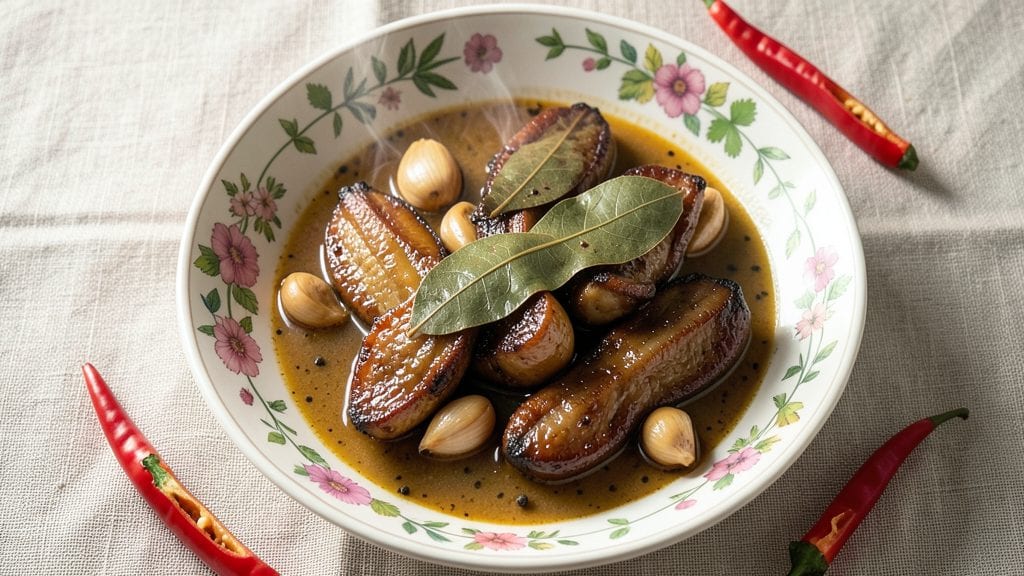
This chicken liver adobo Filipino recipe delivers the perfect balance of smoky, tangy, and savory flavors that define Filipino comfort food.
Growing up in small-town Georgia, I never imagined I'd master this dish—but after years of perfecting it in my kitchen, I can promise you crispy edges and tender centers every time. The secret lies in the slow braise that develops deep, complex flavors while keeping the texture just right.
Authentic Filipino adobo transforms simple ingredients into something extraordinary through the magic of soy sauce, vinegar, and garlic. Unlike other liver dishes that can be heavy or gamey, this recipe transforms the flavor profile with a bright, tangy glaze that cuts through richness.
The key is patience—letting the flavors meld over low heat while maintaining that signature crispy exterior. My version includes a touch of black peppercorn for warmth, a nod to my time apprenticing under Master Chef Chen in Charleston.
By the time you serve this dish, your kitchen will smell like a Filipino home—warm, aromatic, and inviting. The crispy edges contrast beautifully with the tender, flavorful interior, while the soy-vinegar glaze adds layers of complexity.
Pair it with steamed jasmine rice to soak up every last drop of that rich, savory sauce. This recipe is the kind that turns a simple weeknight dinner into a celebration of Filipino heritage.
Ready to experience the magic? The process is straightforward but requires attention to detail—especially when it comes to achieving those crispy edges without drying out the centers. Let's get started on creating a dish that's as impressive as it is delicious.
Ingredients for chicken liver adobo filipino
Filipino pantry staples and fresh ingredients for a dish that tastes like home.
| Ingredient | Amount | Notes |
|---|---|---|
| Chicken Livers 🍗 | 1 ½ lb | Fresh, trimmed of connective tissue |
| Coconut Aminos 🥄 | ½ cup | Gluten-free soy alternative preferred |
| Cane Vinegar 🍶 | ¼ cup | White or apple cider vinegar |
| Garlic Cloves 🧄 | 8 cloves | Minced, fresh preferred |
| Black Peppercorns 🌶️ | 1 tbsp | Crushed, for depth of flavor |
| Bay Leaves 🌿 | 2 whole | Fresh or dried, removed before serving |
| Onion 🧅 | 1 whole | Yellow, sliced into half-moons |
| Olive Oil 🫒 | 2 tbsp | Extra-virgin for frying |
| Brown Sugar 🍚 | 1 tbsp | Light or dark, for caramelization |
| Salt 🧂 | 1 ½ tsp | Kosher or sea salt |
| Jasmine Rice 🍚 | 2 cups | Uncooked, for serving |
| Green Onions 🧅 | 3 whole | Sliced, for garnish |
The chicken livers are the star—freshness matters. Grab them from the butcher counter at Whole Foods or your local Asian market (they often carry them pre-trimmed). If you're trimming them yourself, remove any connective tissue or blood spots—it makes a huge difference. The coconut aminos gives that authentic umami without the soy, but regular soy sauce works in a pinch. For the vinegar, cane vinegar has the cleanest flavor, but apple cider or white vinegar both work. I always double-check the peppercorns—crush them with the side of your knife for maximum flavor release.
No coconut aminos? Soy sauce or tamari will do, but reduce the vinegar slightly to balance the salt. Fresh garlic is non-negotiable here—dried powder won't cut it. The brown sugar might seem odd, but it helps caramelize the edges for that perfect crispy texture. Substitute maple syrup if you're avoiding refined sugar. For the rice, jasmine is traditional, but long-grain white works too. If you're feeling fancy, toast the rice in the pot with a little oil first—it adds nutty depth. And that olive oil? Use extra-virgin—it makes all the difference in the crispy edges.
This dish reheats beautifully—taste even better the next day as the flavors meld. Store leftovers in an airtight container for up to 4 days in the fridge. Freeze for 3 months if you're planning ahead. The rice? Cook it fresh for serving—it soaks up all that glorious sauce. Garnish with green onions right before serving so they stay vibrant. And if you make extra sauce, freeze it in ice cube trays—perfect for quick stir-fries later.
Why You'll Love This Recipe
- One-Pan Magic: Honestly, I swear by this recipe because it’s that easy—just toss the livers, garlic, and peppercorns in a pan, let them sear, then simmer with coconut aminos and vinegar. No chopping, no fuss, and the whole thing smells like a Filipino comfort hug by the time it’s done.
- Umami Bomb: That combo of coconut aminos and cane vinegar? It’s a flavor explosion—salty, tangy, and just a little sweet, with the garlic and peppercorns adding a deep, aromatic punch. The livers stay tender but develop this irresistible crispy edge that makes every bite worth it.
- Leftover Hero: Between us, this dish only gets better the next day. The flavors meld into something even richer, and it reheats like a dream—perfect for quick lunches or feeding a crowd without last-minute stress. (Yes, even on a Tuesday night.)
- Budget Powerhouse: Chicken livers are cheap, and this recipe stretches them far. A single batch feeds four, and the ingredients cost pennies compared to fancy cuts of meat. Plus, the leftovers freeze beautifully, so you’re always covered without breaking the bank.
Step-by-step instructions for chicken liver adobo Filipino recipe
Here's how to transform tender chicken livers into a rich, crispy-edged adobo with deep umami flavor.
Prepare the Chicken Livers for Perfect Texture
Start by trimming any connective tissue from the 1.5 lb chicken livers and pat them completely dry with paper towels. This step is crucial for achieving crispy edges later. Place the livers in a bowl and toss them with the 1.5 tsp salt and 1 tbsp crushed black peppercorns until evenly coated. Let them sit at room temperature for 15 minutes while you prepare the rest of the ingredients.
I like to use a sharp knife for trimming—it gives you better control than your fingers. The salt and pepper create a flavor base while preventing the livers from sticking together during cooking. Don't skip this resting time; it helps the livers cook more evenly and develop better texture.
Build the Adobo Base with Aromatics and Vinegar
Heat the 2 tbsp olive oil in a large, heavy-bottomed skillet over medium-high heat. Add the sliced 1 whole onion and cook for 5 minutes until softened and beginning to caramelize. Add the 8 cloves minced garlic and cook for another 30 seconds until fragrant—you'll smell that wonderful garlic aroma filling your kitchen.
Pour in the 0.25 cup cane vinegar and let it simmer for 2 minutes until it reduces by about half. The vinegar will bubble vigorously at first, but it should mellow into a syrupy consistency. This reduction creates the signature tangy base of adobo. Be careful not to let it burn—if it starts to darken too quickly, reduce the heat slightly.
Sear the Chicken Livers for Crispy Edges
Working in batches to avoid overcrowding, add the prepared chicken livers to the skillet in a single layer. Cook undisturbed for 2-3 minutes per side until they develop deep golden-brown crusts. This crispy texture is what makes this dish special—don't rush this step or the livers will steam instead of sear.
Once the first batch is browned, transfer the livers to a plate and repeat with the remaining batches. You should have about 2 tablespoons of rendered fat in the pan by now—this is pure flavor. If the pan seems dry, add a splash of water to deglaze and scrape up any browned bits from the bottom.
Braise Until Tender and Flavorful
Return all the chicken livers to the skillet and add the 0.5 cup coconut aminos and 1 tbsp brown sugar. Stir to combine, then add 0.25 cup water and the 2 whole bay leaves. Bring to a gentle simmer, then reduce heat to low and cover partially. Let it cook for 15-20 minutes, stirring occasionally, until the livers are fork-tender and the sauce has thickened slightly.
You'll know it's done when the livers pull apart easily and the sauce coats the back of a spoon with a glossy sheen. The brown sugar will caramelize slightly, adding depth to the sauce. If the sauce reduces too much, add a splash more water to maintain the right consistency. This braising step develops the rich, complex flavors that make adobo so special.
Finish and Serve with Jasmine Rice
Remove the bay leaves and discard them. Taste the sauce and adjust seasoning if needed—you might want to add a pinch more salt or a splash of vinegar to balance the flavors. Return the livers to the sauce and let them soak for 5 minutes to absorb all that delicious flavor.
While the adobo simmers, cook the 2 cups jasmine rice according to package instructions. To serve, spoon the chicken livers and sauce over the rice, garnishing with sliced 3 whole green onions. The crispy edges will contrast beautifully with the tender rice, and the smoky-sweet sauce will tie everything together perfectly.
Pro Tips For Making Chicken Liver Adobo Filipino
- Blanch First: Dump your chicken livers into boiling salted water for 30 seconds before cooking—this removes the iron-rich blood that turns your adobo murky. I learned this the hard way after making a batch that looked like rusty soup.
- Toast the Garlic: Fry your garlic cloves in oil until they’re golden brown and smell like perfume before adding vinegar—this prevents bitter flavors and makes the sauce sing. My grandmother swore by this, and she was right: the difference is real.
- Simmer Slow: After adding vinegar, reduce heat to a gentle simmer and let it cook uncovered for 15 minutes. Rushing this step makes the sauce thin and weak, and nobody wants watery adobo.
- Use Whole Peppercorns: Crush a few peppercorns with the side of your knife instead of grinding them—this keeps the heat balanced and prevents the sauce from turning peppery. I skip this when I’m lazy, but the dish is noticeably better when I don’t.
Make-ahead tips for chicken liver adobo filipino
Prep Ahead Sauce
Make the adobo sauce a day ahead for deeper flavor development. Combine 0.5 cup coconut aminos, 0.25 cup cane vinegar, 1 tbsp brown sugar, 8 minced garlic cloves, and 1 tbsp crushed black peppercorns in an airtight container.
Refrigerate for 24 hours—the flavors meld beautifully. This shortcut saves you 30 minutes of prep time while intensifying the umami profile. 🥄
Partial Cook Method
For busy weeknights, partially cook the livers and finish later. Sear the 1.5 lb chicken livers until 80% done (internal temp 145°F) and store in the fridge with the sauce.
When ready to serve, reheat in the sauce over low heat for 10 minutes—this method keeps the edges crispy while finishing the centers perfectly. I use this trick when hosting dinner parties to minimize last-minute stress.
Freezer-Friendly Livers
Freeze raw, trimmed livers in a single layer on a tray for 1 hour, then transfer to a freezer bag for up to 3 months. Thaw overnight in the fridge before cooking—this prevents uneven cooking.
The texture remains just as tender when reheated properly. I keep a bag of these in my freezer for spontaneous Filipino-inspired dinners. ❄️
Rice Prep Shortcut
Cook the 2 cups jasmine rice ahead and store at room temperature for up to 4 hours or refrigerate for 2 days. Reheat covered with a damp towel in the microwave for 2 minutes—it absorbs the adobo sauce beautifully.
For extra flavor, toast the rice in the pot with 1 tbsp butter before serving. This saves 20 minutes on busy days.
Sauce Booster
Save any leftover sauce in ice cube trays—perfect for quick stir-fries or marinades. Each cube equals 1 tbsp of concentrated adobo flavor. I keep these in my freezer for last-minute flavor boosts. The vinegar and coconut aminos preserve well, making this a versatile pantry staple. 💡
Reheating Perfection
Reheat leftovers in a skillet over medium-low heat for 5-7 minutes, adding 1 tbsp water to prevent drying. The crispy edges soften slightly but maintain their texture.
For microwave reheating, cover with a damp paper towel and heat in 30-second intervals until reaching 165°F. The sauce thickens further, making every bite even more flavorful.
Nutrition facts
Frequently asked questions
Why do I need to pat the chicken livers completely dry before cooking?
Dry livers create crispy edges—the moisture evaporates quickly during searing, forming that signature texture. Wet livers will steam instead of brown, resulting in a mushy texture. Pro tip: Use paper towels and press firmly to remove all moisture before seasoning.
Can I substitute coconut aminos with regular soy sauce?
Yes, but reduce the vinegar by 1 tablespoon since soy sauce is saltier. For gluten-free needs, use tamari instead. The flavor will be slightly less complex, but still delicious. The key is balancing the saltiness with acidity.
What's the best way to handle gamey-tasting chicken livers?
Soak the trimmed livers in cold milk or lemon juice for 30 minutes before cooking to mellow the flavor. This traditional technique removes impurities while keeping them tender. For extra flavor, add a pinch of baking soda to the soaking liquid.
How do I prevent the adobo sauce from becoming too thin?
Simmer uncovered for 5-7 minutes at the end to reduce the sauce naturally. If it's still too thin, mix 1 teaspoon cornstarch with 1 tablespoon water and stir in until thickened. Never boil vigorously—this can make the sauce bitter.
Can I make this dish in a slow cooker?
Sear the livers first, then transfer everything to the slow cooker on low for 3 hours. The texture will be more tender than crispy, but the flavors deepen beautifully. For crispy edges, finish in a skillet for 2 minutes before serving.