
Soups & Stews
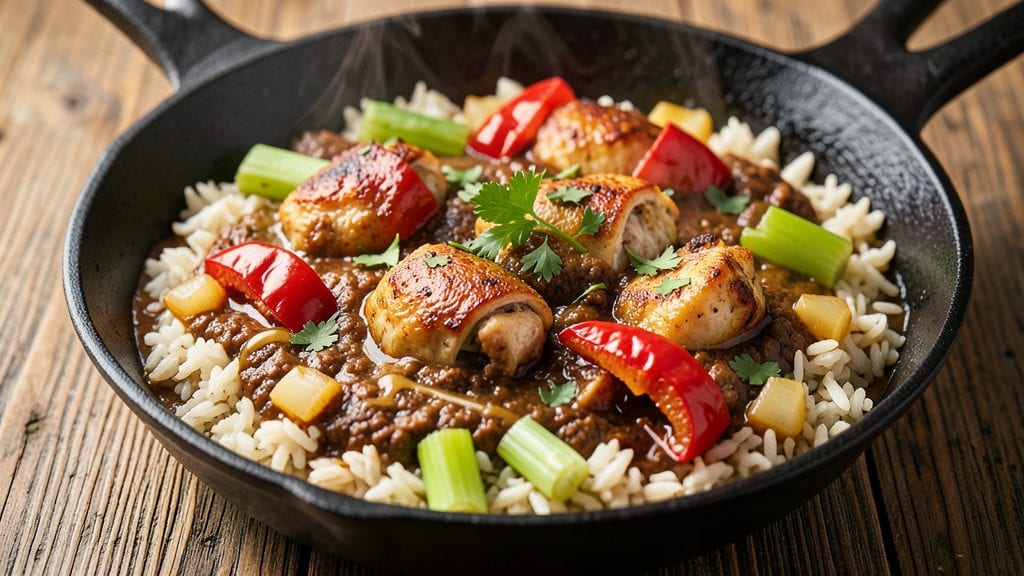
This chicken gumbo recipe brings the rich, smoky flavors of Louisiana directly to your kitchen with a deep, velvety roux that forms the heart of every authentic pot.
The slow-simmered combination of dark meat, the holy trinity of onions, celery, and bell peppers, and a blend of Cajun spices creates a dish that's both comforting and complex—perfect for feeding a crowd or savoring on a chilly evening.
My version stays true to tradition while offering a foolproof method for that perfect dark roux without burning.
The secret to great gumbo lies in the roux—cooking fat and flour together until it reaches a deep mahogany color, which forms the flavor foundation. We'll build this slowly, layering in the holy trinity and spices before adding chicken and okra for texture.
The dish simmers for hours, allowing flavors to meld into a rich, hearty stew that's traditionally served over steamed white rice. This recipe delivers restaurant-quality results with a method that's approachable for home cooks.
What you'll end up with is a steaming pot of gumbo that's thick enough to coat a spoon, with tender chicken pieces floating in a sauce that's smoky, spicy, and deeply savory. The okra adds a subtle creaminess that balances the heat, while the roux provides that unmistakable gumbo depth.
Each bite delivers layers of flavor—from the crispy chicken skin to the tender meat and the complex, spice-infused broth. This is the kind of dish that tastes even better the next day as flavors continue to develop.
Serve this gumbo with steamed white rice and garnish with chopped green onions and hot sauce for serving. The leftovers reheat beautifully, making this an ideal meal for prepping ahead.
Whether you're recreating a Louisiana classic or introducing gumbo to new diners, this recipe delivers the soul of the South in every spoonful. Let's get cooking!
Ingredients for chicken "gumbo
The foundation of this gumbo starts with butter, flour, and patience for the roux, then builds with dark meat and the holy trinity.
| Ingredient | Amount | Notes |
|---|---|---|
| Chicken Thighs 🍗 | 2 ½ lb | Bone-in, skin-on, cut into 2-inch pieces |
| Unsalted Butter 🧈 | ¾ cup | Cold, cut into 1-inch cubes |
| All-Purpose Flour 🌾 | 1 ½ cups | White, for roux development |
| Yellow Onion 🧅 | 2 whole | Medium, diced, holy trinity |
| Celery Stalks 🥬 | 3 whole | Fresh, diced, holy trinity |
| Green Bell Pepper 🌶️ | 1 whole | Medium, diced, holy trinity |
| Garlic Cloves 🧄 | 4 cloves | Fresh, minced |
| Dried Okra 🌱 | ½ cup | Sliced into 1/4-inch rounds |
| Chicken Broth 💧 | 4 cups | Low-sodium, homemade preferred |
| Cajun Seasoning 🌶️ | 2 tbsp | Homemade or quality store-bought |
| Smoked Paprika 🌶️ | 1 tbsp | For authentic smoky depth |
| Thyme Leaves 🌿 | 1 tbsp | Fresh, chopped |
| Bay Leaves 🍃 | 2 whole | Dried, for aromatic depth |
| Salt 🧂 | 1 ½ tsp | Kosher, adjust to taste |
| Black Pepper 🌶️ | ½ tsp | Freshly ground |
| Green Onions 🧅 | ¼ cup | Chopped, for garnish |
| Hot Sauce 🔥 | 2 tbsp | For serving, optional |
The butter and flour are non-negotiable for that signature dark roux. Use unsalted butter—the salt content varies wildly between brands, and you want to control the seasoning. Look for European-style butter like Plugrá or Land O'Lakes Signature if you're in the U.S., as they have higher fat content and better flavor. The flour should be all-purpose, white flour—no whole wheat or gluten-free substitutes here. For the chicken, bone-in, skin-on thighs are essential; they render fat and stay juicy during the long simmer. Buy them from the butcher counter if possible—they'll have fresher cuts than the packaged ones. If you can't find bone-in, use bone-in, skinless thighs and add an extra 0.25 cups of butter to compensate for lost fat.
No Cajun seasoning? Mix smoked paprika, garlic powder, onion powder, dried thyme, and cayenne in a 2:1:1:1:0.5 ratio for a homemade blend. Fresh thyme is ideal, but dried works at half the amount. The okra can be swapped for 1 cup frozen chopped okra or even 1/4 cup cornstarch if you're avoiding it entirely. For the holy trinity, yellow onions and celery are non-negotiable, but you can use green bell peppers or jalapeños for heat. The broth matters—homemade chicken broth gives the best flavor, but low-sodium store-bought works in a pinch. If you're short on time, a 1:1 mix of chicken broth and water still delivers. The bay leaves should be dried, not fresh—they hold up better during the long simmer.
This gumbo tastes even better the next day as flavors meld. Store in an airtight container in the fridge for up to 5 days or freeze for 3 months. For reheating, bring to a simmer on the stove—never microwave, as it breaks down the roux. To prep ahead, make the roux and store it in the fridge for up to 3 days before adding the rest. The chicken can be pre-cooked and stored separately, then added back in when reheating. For serving, keep the hot sauce and green onions on the table—let everyone customize their bowl. The roux alone keeps for 1 week in the fridge if you want to make it ahead of time.
Why You'll Love This Recipe
- One-Pot Simplicity: I swear by this recipe—just brown the thighs, toss in the butter and flour, then let the roux work its magic while you chop veggies. No extra pans, no stress, just hands-off richness.
- Roux Magic Unlocked: That golden butter-flour roux? It’s the secret weapon. It turns simple chicken, onions, and celery into something deep, nutty, and impossibly satisfying—no fancy ingredients, just pure flavor.
- Weeknight to Dinner Party: Same recipe, different vibes. Serve it over rice for a quick family meal or ladle it into bowls with crusty bread for guests. The prep’s identical; the occasion just changes.
- Budget-Friendly Leftovers: Chicken thighs stretch this dish far, and the roux makes every bite taste like you slaved over it. I’ve reheated portions for days—no dryness, just that same rich, hearty taste. Win.
Step-by-step instructions for chicken gumbo
Here's how to build rich, smoky gumbo with a perfect dark roux and tender chicken.
Develop the Dark Roux
In a heavy Dutch oven over medium heat, melt the 0.75 cup unsalted butter completely. Immediately whisk in the 1.5 cups all-purpose flour and stir constantly to prevent burning. The mixture will bubble vigorously and darken quickly.
Watch the roux closely—it should reach a deep chocolate brown color within 15-20 minutes. This is your flavor foundation, so don't rush it. If it starts to smoke or burn, reduce the heat slightly. The roux should smell nutty and rich, not acrid. Once properly developed, remove the pot from heat and set aside.
Sear the Chicken and Holy Trinity
Return the Dutch oven to medium-high heat and add the 2.5 lb chicken thighs, skin-side down. Sear for 4-5 minutes until golden brown, then flip and cook another 2-3 minutes per side. Remove the chicken and set aside.
In the same pot, add the 2 whole yellow onion, 3 whole celery stalks, and 1 whole green bell pepper, all diced. Cook for 5-6 minutes until softened. Stir in the 4 cloves minced garlic and cook for 30 seconds until fragrant. This classic combination of onion, celery, and bell pepper is called the "holy trinity" for good reason—it forms the flavor base of Cajun cooking.
Build the Gumbo Base
Return the seared chicken to the pot along with any accumulated juices. Sprinkle over the 2 tbsp Cajun seasoning, 1 tbsp smoked paprika, 1 tbsp thyme leaves, 2 whole bay leaves, 1.5 tsp salt, and 0.5 tsp black pepper. Stir gently to combine, being careful not to break up the chicken pieces.
Slowly pour in the 4 cups chicken broth, stirring constantly to prevent lumps. Add the 0.5 cup sliced dried okra and bring to a simmer. Cover and cook for 45-50 minutes on low heat, stirring occasionally, until the chicken is tender and the okra has softened. The gumbo should develop a rich, smoky aroma as it simmers.
Finish and Serve
Once the chicken is fully cooked, remove it from the pot and set aside. Strain the gumbo through a fine-mesh sieve into a clean pot, pressing on the solids to extract all the flavor. Return the strained gumbo to the heat and simmer for 5-7 minutes to reduce slightly and intensify the flavors.
Shred the chicken using two forks and return it to the gumbo. Stir in the 0.25 cup chopped green onions and adjust the seasoning if needed. Serve the gumbo hot in bowls, with 2 tbsp hot sauce on the side for those who prefer extra heat. The perfect gumbo should have a thick, velvety texture with tender chicken and a deep, complex flavor that balances smokiness, spice, and richness.
Pro Tips For Making Chicken "Gumbo
- Brown the Thighs Hard: Skip the gentle sear—get those chicken thighs deep golden on all sides before pulling them out. I used to rush this, and the gumbo never tasted as rich; the Maillard reaction in that crust is what builds flavor later.
- Sweat, Don’t Sauté Onions: Cover the onions with celery and cook them low and slow until translucent, not crispy. High heat burns them before the celery softens, and you’ll end up with a bitter roux foundation—no one wants that.
- Whisk the Roux Relentlessly: The moment you add flour to butter, stop stirring and walk away for 30 seconds—the butter will foam violently. Then, return and whisk like your life depends on it; a broken roux means a grainy gumbo.
- Deglaze with Chicken Fat: After removing the thighs, let the pan cool just enough to pour in a splash of white wine or broth—not water. The fat clinging to the pan adds richness; water just dilutes the flavor. (Yes, even if you’re impatient like me.)
Troubleshooting perfect results
Roux Burning Risk
Your roux is the soul of gumbo, but it can easily burn if you're not careful. I've ruined more than a few trying to rush this step. Always use medium heat and stir constantly—every 30 seconds—with a wooden spoon.
If you see it darken too quickly or smell something acrid, immediately reduce the heat to low and keep stirring. A properly developed roux should be deep chocolate brown (like melted milk chocolate) and smell nutty, not burnt. 🔥
Chicken Overcooking
Since gumbo simmers for hours, the chicken can easily dry out if not handled properly. I recommend searing the thighs first to render fat, then removing them from the pot while you build the base. Return them to the simmering gumbo only when the broth is ready—this keeps them juicy.
The chicken is done when it reaches an internal temperature of 165°F and the meat pulls away cleanly from the bone. If it's still tough after simmering, cover and cook another 10-15 minutes on low heat.
Lumpy Gumbo Texture
Nothing ruins gumbo faster than lumps from improperly mixed roux or flour. To avoid this, always whisk the roux constantly while cooking, and stir vigorously when adding broth.
If you notice lumps forming during simmering, remove the pot from heat and use an immersion blender (or carefully whisk) to break them up. For extra insurance, strain the gumbo through a fine-mesh sieve before returning it to the pot to finish cooking.
This ensures a silky-smooth texture every time. 💫
Okra Texture Issues
Okra can turn slimy if overcooked, which is the last thing you want in your gumbo. To prevent this, add it after the chicken and spices, and simmer for no more than 45-50 minutes. If using fresh okra, slice it into ¼-inch rounds before adding.
For dried okra, soak it in warm water for 10 minutes before slicing to rehydrate. If you're avoiding okra entirely, substitute with ¼ cup cornstarch mixed with 2 tbsp cold water—stir it into the simmering gumbo to thicken without adding texture.
Weak Flavor Development
Gumbo needs time to develop its rich, complex flavors, but many home cooks rush the simmering process. After adding the broth, let it simmer uncovered for at least 1 hour to allow the alcohol in the Cajun seasoning to evaporate (this deepens the flavor).
For even better results, simmer 2-3 hours on low heat—this is where the magic happens. If your gumbo tastes bland, try adding 1 tbsp Worcestershire sauce or a pinch of MSG (just a tiny bit!) to boost umami.
A splash of hot sauce or lemon juice at the end can also brighten the flavors. ✨
Broth Too Thin or Too Thick
Getting the gumbo consistency right takes practice. If your gumbo is too thin, simmer it uncovered for 10-15 minutes to reduce the liquid. For extra thickness, mix 1 tbsp cornstarch with 2 tbsp cold water, then stir it into the gumbo and simmer for 2-3 minutes until it thickens.
If it's too thick, whisk in ¼ cup warm broth or water to loosen it. The ideal gumbo should coat the back of a spoon but still be pourable. Always taste as you go—seasoning adjustments are easier before serving!
Nutrition facts
Frequently asked questions
Why does gumbo need a dark roux?
The dark roux is the flavor foundation of gumbo, developed by cooking butter and flour until they reach a deep chocolate brown color. This process creates complex flavors through the Maillard reaction and caramelization, giving gumbo its signature rich, nutty depth. A properly made roux should smell nutty and rich—not burnt—before adding the holy trinity and broth.
Can I make gumbo without okra?
While okra adds a subtle creaminess, you can substitute it with ¼ cup cornstarch mixed with 2 tbsp cold water for thickening. For a more traditional texture, skip the okra entirely—many classic gumbo recipes rely solely on the roux and holy trinity for their signature body. The dish will still be delicious and authentic.
How do I know when the roux is done?
Your roux is ready when it reaches a deep mahogany color, similar to melted milk chocolate, and smells nutty and rich. This typically takes 15-20 minutes of constant stirring over medium heat. If it starts to smoke or smell burnt, immediately reduce the heat and keep stirring. A properly developed roux should coat the back of a spoon smoothly.
What's the difference between Cajun and Creole gumbo?
Cajun gumbo often features a darker roux and relies on the "holy trinity" (onion, celery, bell pepper) with seafood or meat, while Creole gumbo may include tomatoes, filé powder (ground sassafras), and a wider variety of ingredients like okra or smoked meats. Both are rich and flavorful, but Creole versions tend to be slightly lighter in color due to tomato additions.
Can I make gumbo in a slow cooker?
Yes, but with adjustments. First, develop the roux on the stovetop as usual, then transfer everything to the slow cooker. Cook on low for 6-8 hours instead of simmering, stirring occasionally to prevent lumps. The slow cooker method works well for flavor development but may require extra broth to achieve the right consistency. For best results, finish on the stove to reduce the sauce.