
Main Courses
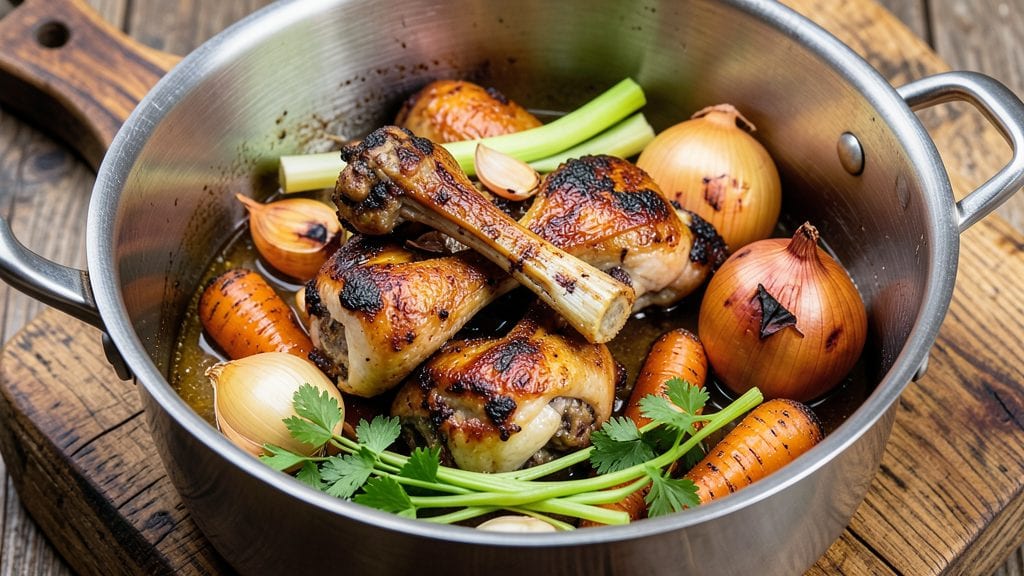
Mastering Alton Brown's chicken stock recipe transforms ordinary cooking into something extraordinary—this deep umami base elevates every dish from soups to braises. Growing up in small-town Georgia, I learned that great stock starts with bones roasted until they yield their marrow, creating a richness that store-bought versions can't match.
The precision in timing and technique separates good stock from restaurant-quality results.
This recipe relies on simple ingredients—chicken bones, aromatics, and time—but the method is where the magic happens. Roasting the bones caramelizes their surfaces, intensifying flavor, while a 30-minute simmer with onions, carrots, and celery builds a flavor foundation.
Straining through a fine-mesh sieve ensures a silky texture without sediment, a professional touch that makes all the difference.
The result is a rich, golden stock with layers of savory depth, perfect for braising meats or enriching soups. Unlike quick versions, this method delivers complexity that develops over 2-3 hours, rewarding patience with unmatched flavor.
Store it in the freezer for up to 6 months, ready to transform any recipe into something extraordinary.
Use this stock as the base for creamy chicken pot pie, hearty beef stew, or even risotto—its umami richness turns simple dishes into showstoppers. The key is treating it like a foundational ingredient, not just a side note in your cooking process.
Ingredients for alton brown chicken stock
Simple ingredients, precise technique—this stock builds umami depth from scratch for restaurant-quality results.
| Ingredient | Amount | Notes |
|---|---|---|
| Chicken Bones 🍗 | 3 lb | Raw, including neck and backs for collagen |
| Yellow Onions 🧅 | 1 whole | Medium size, peeled and halved |
| Carrots 🥕 | 2 whole | Medium size, peeled and roughly chopped |
| Celery Stalks 🌿 | 4 whole | Fresh, trimmed and cut into 2-inch pieces |
| Garlic Cloves 🧄 | 4 cloves | Fresh, peeled and lightly crushed |
| Fresh Parsley Stems 🌿 | 4 whole | With roots attached for extra flavor |
| Fresh Thyme Sprigs 🌿 | 4 whole | With stems intact for aromatic infusion |
| Bay Leaves 🍃 | 2 whole | Dried, standard supermarket variety |
| Black Peppercorns 🌶️ | 1 tbsp | Freshly cracked for robust flavor |
| Kosher Salt 🧂 | 1 tbsp | Diamond Crystal preferred for clarity |
| Cold Water 💧 | 12 cups | Filtered preferred for purity |
| Extra-Virgin Olive Oil 🫒 | 2 tbsp | For roasting bones to enhance caramelization |
The chicken bones are the foundation—look for raw, uncooked bones including necks and backs at your local butcher or grocery store's meat department. Whole Foods Market or Costco often carry high-quality chicken frames that yield excellent marrow. If using store-bought bones, ensure they're fresh with a vibrant color and minimal odor. The aromatics—onions, carrots, and celery—should be fresh, not wilted, and the garlic cloves should be firm and free of sprouts. For herbs, Williams Sonoma or local farmers' markets offer superior quality over supermarket bundles. The key is using ingredients at their peak to maximize flavor extraction during the roasting process.
No fresh thyme? Dried thyme at one-third the amount works in a pinch, though fresh imparts superior depth. Substituting fennel bulb for half the carrots adds an anise note that complements the stock beautifully. For water, filtered or spring water is ideal, but tap water suffices if free of strong odors. The olive oil should be extra-virgin with a fruity aroma—avoid heavily processed varieties. If using pre-minced garlic, toast it in a dry pan for 30 seconds to deepen its flavor before adding to the roasting tray. The bay leaves can be omitted entirely if you prefer a lighter stock profile, though they contribute subtle earthiness.
This stock develops richness over time—plan for at least 2-3 hours of simmering for optimal flavor extraction. Store in airtight containers in the refrigerator for up to 5 days or freeze in ice cube trays for 6 months. Label containers with the date to track freshness. For long-term storage, portion into 1-cup containers—perfect for thawing only what you need. The stock thickens as it cools, so stir gently before reheating. Use within 3 days of thawing for peak quality, though it remains safe for up to 1 month when properly stored.
Why You'll Love This Recipe
- No Chopping Chaos: I swear by the "mirepoix" shortcut—just rough-chop onions, carrots, and celery into ½-inch pieces. No food processor, no stress, and the flavor? Still deep and rich, like it’s been simmering all day.
- Umami Bomb: That first sip? Pure reward. The chicken bones caramelize into sweet, gelatinous goodness while the garlic and onions build layers of savory depth. Honestly, this stock tastes like a hug from a French chef—warm, complex, and impossible to resist.
- Freezer-Friendly Gold: Make a big batch (I always do) and freeze it in ice cube trays. Need a quick risotto or soup base? Just grab a few cubes. My freezer’s stockpile saved me during that week of takeout takeovers—no regrets, just flavor.
- Pantry Magic: Between us, this recipe turns scraps into treasure. Use leftover roasted chicken bones, wilted veggies from the fridge, or even that half-onion you forgot about. It’s the ultimate "use it up" hack—no waste, all flavor.
Step-by-step instructions for alton brown's chicken stock recipe
This method transforms raw bones into a rich, umami-packed foundation using precise technique and aromatic vegetables.
Roast the Chicken Bones for Deep Flavor
Preheat your oven to 425°F and position a rack in the middle position. Arrange the 3 lb chicken bones (including neck and backs) on a rimmed baking sheet in a single layer. Drizzle evenly with 2 tbsp extra-virgin olive oil and toss to coat completely, ensuring every bone develops that coveted caramelized crust.
Roast for 30-40 minutes until the bones develop a deep golden-brown color and the surrounding skin begins to crisp. This step isn't just about browning—it's about developing complex Maillard reactions that will infuse your stock with depth. The bones should smell intensely meaty when removed from the oven, a clear indication of successful caramelization.
Transfer the roasted bones to a large stockpot, leaving behind any dark brown sediment in the baking sheet. This sediment contains concentrated flavor compounds that would otherwise cloud your finished stock.
Prepare the Vegetable Base
In the same stockpot with the roasted bones, add the 1 whole yellow onion (halved), 2 whole carrots (roughly chopped), 4 whole celery stalks (cut into 2-inch pieces), and 4 cloves garlic cloves (lightly crushed). These vegetables form the aromatic trifecta known as "mirepoix," providing sweetness, earthiness, and savory depth respectively.
Add the 4 whole fresh parsley stems (with roots attached) and 4 whole fresh thyme sprigs (with stems intact) for their concentrated herbal notes. Tuck in the 2 whole bay leaves and sprinkle evenly with 1 tbsp kosher salt and 1 tbsp black peppercorns (freshly cracked). The peppercorns will add subtle heat and complexity that rounds out the flavor profile.
Stir gently to combine all ingredients, ensuring the vegetables nestle against the bones. The goal is to create surface area contact that maximizes flavor extraction during the simmering process.
Simmer the Stock for Maximum Extraction
Pour in 12 cups cold water, covering the bones and vegetables completely. The cold water prevents immediate temperature shock that could cause the bones to release impurities. Bring to a gentle boil over medium-high heat, then immediately reduce to a barely simmering state—you should see only the faintest bubbles breaking the surface.
This precise simmering point (195-205°F) is critical. Too vigorous a boil will create cloudy stock by agitating impurities, while too gentle a simmer won't extract maximum flavor. Skim any foam or impurities that rise to the surface during the first 15 minutes of simmering using a fine-mesh skimmer or ladle.
Maintain this gentle simmer for 3-4 hours, partially covered with a lid. The longer simmer time allows collagen to break down from the bones, creating that signature gelatinous texture that thickens when chilled. Check the water level periodically and add hot water as needed to maintain coverage.
Strain and Finish the Stock
After simmering, remove the stockpot from heat and let it sit for 10 minutes to allow any settled particles to drop to the bottom. Line a fine-mesh strainer with cheesecloth or a coffee filter for extra clarity if desired, then carefully strain the stock into a clean container.
Discard the solid vegetable matter and bones. The stock should now be clear with a rich, golden hue and an intense aroma that combines meaty, herbal, and umami notes. For maximum flavor development, allow the stock to cool completely before refrigerating. The fat will solidify on top and can be skimmed off before using.
This stock will keep in the refrigerator for up to 5 days or can be frozen for 3 months. The flavor actually improves as it ages, developing deeper complexity with each passing day. Use this as the base for soups, braises, or risottos where a rich, meaty foundation is essential.
Pro Tips For Making Alton Brown Chicken Stock
- Roast Bones First: I learned this the hard way—raw chicken bones take forever to render flavor. Toss them in a 400°F oven for 20-30 minutes until golden, then deglaze the pan with water before adding to your pot. That caramelized crust is where the depth of flavor hides.
- Chop Veggies Small: Skip the big chunks—Alton’s recipe calls for finely diced onions, carrots, and celery (the "mirepoix") because they break down faster and infuse flavor better. Aim for pea-sized pieces; anything larger will turn to mush and clog your strainer.
- Don’t Rush the Simmer: Low and slow is the only way. After the initial boil, reduce to a gentle simmer where tiny bubbles break the surface occasionally. Skim foam for the first 30 minutes, then let it cook uncovered for 3-4 hours—no peeking or stirring, or you’ll cloud the stock.
- Save the Garlic: My grandmother swore by this: Add whole garlic cloves after the stock has simmered for 2 hours. Smash them lightly with the side of your knife so they infuse without burning. Remove them before straining—bitter garlic ruins everything.
Wine and beer pairings for this alton brown chicken stock
White Wine Pairings
For this chicken stock, I reach for a crisp, mineral-driven Sauvignon Blanc from New Zealand—think Oyster Bay or Kim Crawford. The wine's bright acidity and citrus notes cut through the stock's richness while complementing its herbal depth.
The slight grassiness in Sauvignon Blanc mirrors the thyme and parsley in the stock, creating a harmonious balance. Serve it slightly chilled at 45-48°F to enhance its refreshing qualities. 🍷
Light Beer Options
A Belgian witbier like Hoegaarden or Stella Artois offers a perfect beer pairing with its effervescent quality and subtle coriander notes. The beer's light body won't overpower the stock's umami richness, while its slight sweetness provides a pleasant contrast.
For a more robust option, try a German Helles Lager—its malty backbone stands up to the stock's depth without competing. 🍺
Red Wine Contrast
If you prefer red wine, a Pinot Noir from Oregon's Willamette Valley—like Domaine Serene—works surprisingly well. The wine's delicate red fruit flavors and earthy undertones complement the stock's herbal and meaty notes without overwhelming them.
Opt for a younger vintage with 12-15% ABV to maintain balance. Serve at 55-58°F to preserve its vibrant acidity.
Spirit Pairing
For a more casual pairing, a gin and tonic with a twist elevates the experience. Use a London Dry gin like Hendrick's and add a splash of grapefruit juice to the tonic.
The gin's botanical notes echo the stock's thyme and parsley, while the grapefruit's tartness provides a refreshing contrast. Garnish with a lemon twist for an extra pop of citrus. ✨
Regional Adaptations
In the Southeast, where I grew up, we often paired rich stocks with sweet tea—the natural sweetness balances the stock's savory depth. For a more sophisticated touch, try a Southern-style bourbon cocktail like a Manhattan, where the whiskey's caramel notes complement the stock's umami richness.
The tannins in the whiskey also help cleanse the palate between bites.
Cocktail Enhancement
Use this stock as the base for a chicken stock consommé cocktail—reduce the stock by half, then chill and strain through a fine-mesh sieve. Mix with vodka or gin, a splash of lemon juice, and a touch of honey for a savory-sweet sipper.
Garnish with a lemon twist or fresh thyme sprig for an elegant touch. This cocktail is perfect for showcasing the stock's depth in a refreshing format. 💡
Nutrition facts
Frequently asked questions
Why roast the chicken bones before making stock?
Roasting caramelizes the bones, creating deep Maillard reactions that intensify flavor. This step unlocks rich, meaty notes that cold-start simmering misses. The bones should smell intensely savory when removed from the oven—this aroma translates directly to your finished stock's complexity.
Can I use chicken backs instead of necks?
Chicken backs work perfectly and yield excellent collagen for thickening. For best results, combine both necks and backs—the necks add gelatinous richness while the backs provide sturdy structure. Just ensure they're raw and uncooked before roasting.
How do I know when the stock is done simmering?
The stock is ready when it develops a deep golden color and intense aroma after 3-4 hours of gentle simmering. The bones should be soft enough to crumble easily with tongs, and the liquid should have reduced slightly but still cover the ingredients.
What's the best way to store homemade stock?
For short-term use, refrigerate in airtight containers for up to 5 days. For long-term storage, freeze in 1-cup portions—this makes thawing easier. Label containers with dates, as flavor peaks within 3 months but remains safe for up to 6 months.
Can I make this stock without a pressure cooker?
Yes! This recipe is designed for stovetop simmering only—no pressure cooker needed. The 3-4 hour gentle simmer at 195-205°F extracts maximum flavor without requiring high-pressure equipment. Just maintain consistent heat and skim impurities regularly.